There’s a certain kind of silence that lives in the Italian countryside — not empty, but full. The hum of cicadas, the warmth of sunbaked stone, the scent of rosemary in the air.
In a small casale tucked among vineyards and olive groves, shutters creak open to let in golden light. The table is already set, a breeze slips through linen curtains, and the house seems to breathe along with the day.
Italian country living isn’t about grandeur or perfection. It’s about the warmth of simplicity — spaces that age gracefully, colors that feel kissed by the sun, and details that whisper of time and care. Here’s how to bring that soft, lived-in elegance — the essence of the Mediterranean — into your own home.
A Home That Breathes
In the Italian countryside, walls are thick but homes feel light. The windows are never sealed shut; they open wide to invite in sunlight, scent, and sound. It’s a rhythm of air and movement — linen curtains billowing, birdsong echoing, the smell of lemon trees drifting inside.
To bring this feeling home, keep your spaces open and uncluttered. Let windows go bare or dress them lightly in sheer fabrics that move with the breeze. Allow light to flow from one room to another. A casale isn’t static — it changes with the day, always breathing.
The Language of Earth
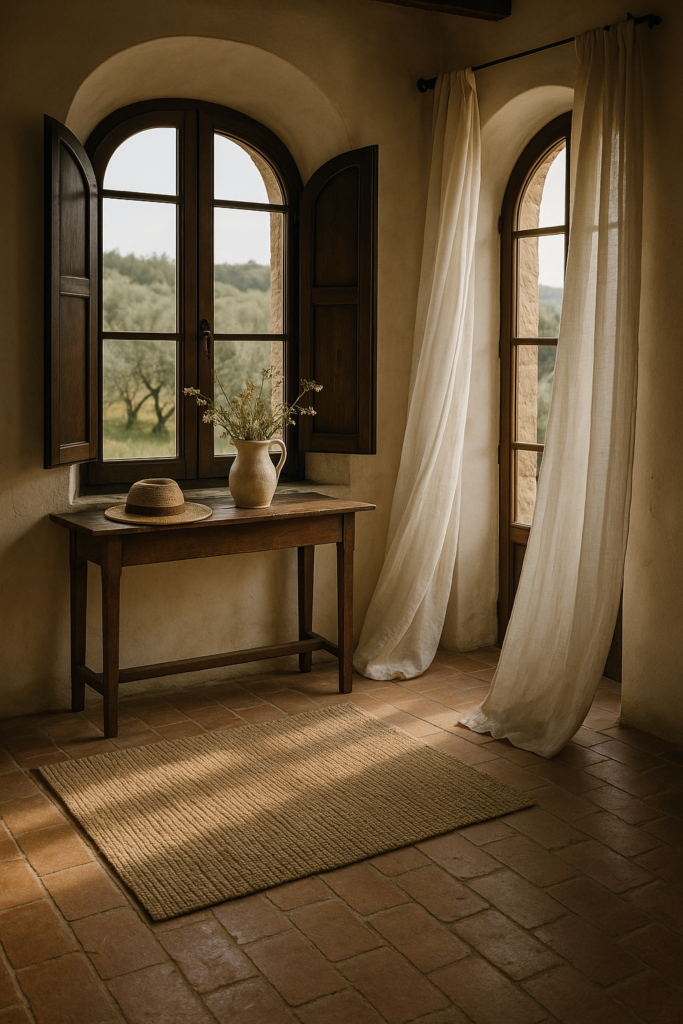
Italian interiors are written in the language of the land. Terracotta floors stay cool underfoot. Rough plaster walls glow softly in the sun. Olive wood, clay, and stone form the bones of every room.
It’s this connection to the earth — tactile, imperfect, grounding — that makes the Mediterranean home so comforting.
Choose materials that feel honest: lime-washed walls, unsealed wood, natural stone. Let texture speak louder than color. When the afternoon light hits these surfaces, the whole house comes alive.
A Palette Inspired by the Countryside
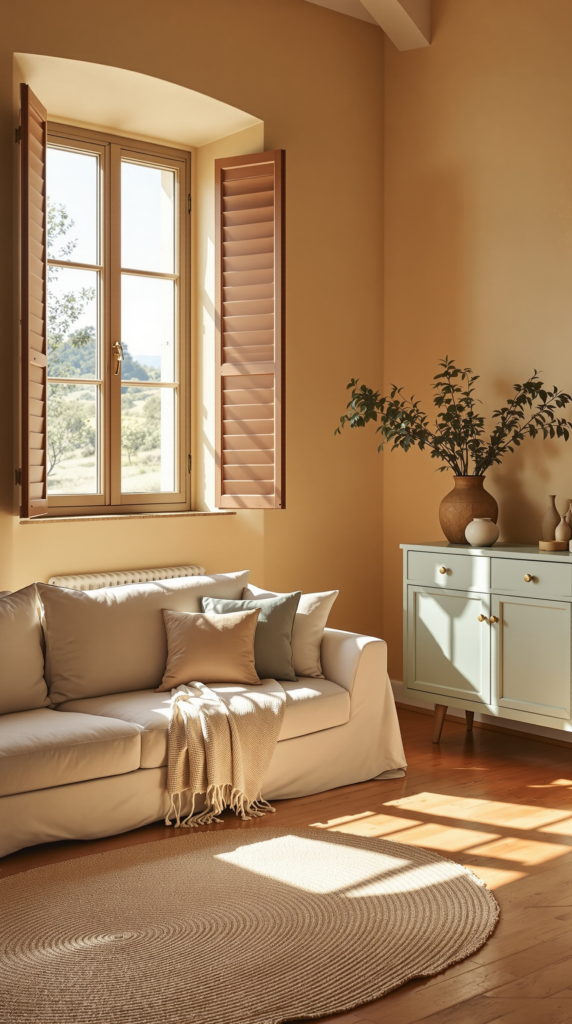
The Italian countryside paints its own palette: fields of wheat, blue skies, and terracotta rooftops. Inside, those colors soften with time. Creams, ochres, dusty sage, faded rose, and the palest blues — all mellowed by sunlight and shadow.
Avoid sharp contrast. Instead, let your palette feel as if it’s been gently bleached by years of sun and salt air. Mix warm neutrals with subtle hints of color, and watch how natural light transforms everything from morning to dusk.
The Beauty of Imperfection
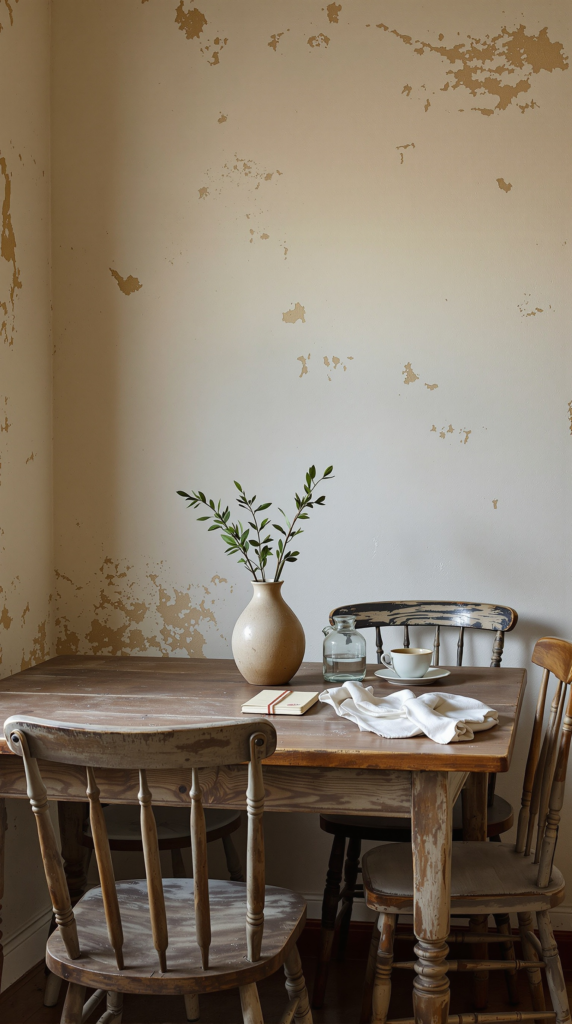
In the Italian casale, perfection is the enemy of charm. You’ll find chipped tiles, uneven plaster, and mismatched chairs — and somehow, it’s all beautiful. Every mark is a reminder that the home is lived in, not staged.
Embrace patina wherever you can. Choose furniture that tells a story — a vintage table, a weathered bench, a ceramic bowl with a crack running through it.
In a world obsessed with flawless surfaces, the Italian way teaches us that character is the real luxury.
Furniture That Tells a Story
Step into a Tuscan farmhouse, and you’ll notice something right away: the furniture isn’t coordinated — it’s collected.
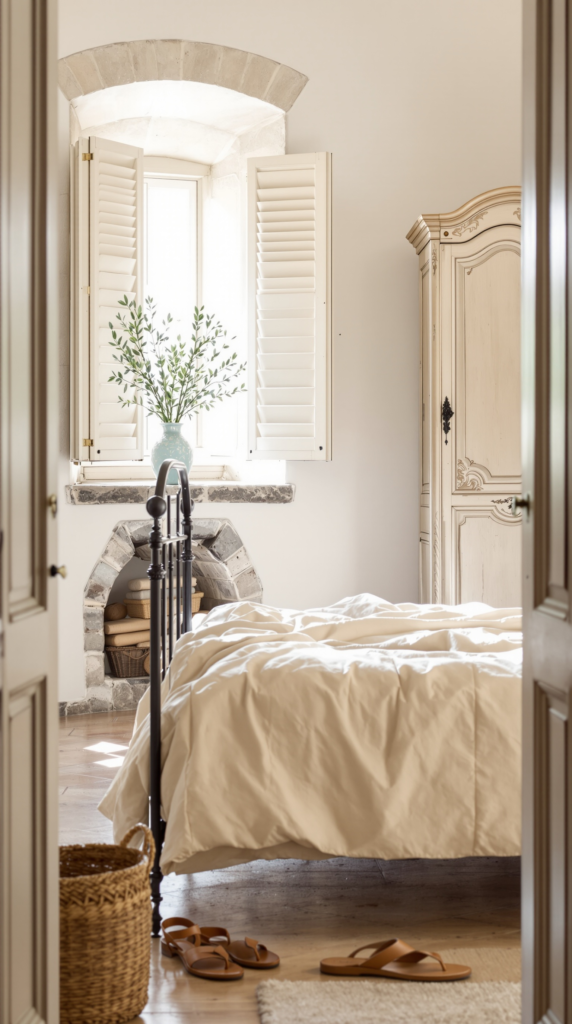
Long wooden tables stretch across the kitchen, surrounded by an eclectic mix of chairs. Iron beds with curved frames, handmade cabinets, baskets woven decades ago — everything feels personal, inherited, and touched by time.
Bring that sensibility home by mixing old with new. Pair a rustic dining table with modern glassware, or vintage chairs with soft linen upholstery. Italian country style lives in contrast — timeless craftsmanship grounded in a sense of ease.
The Kitchen as the Heart of the Home
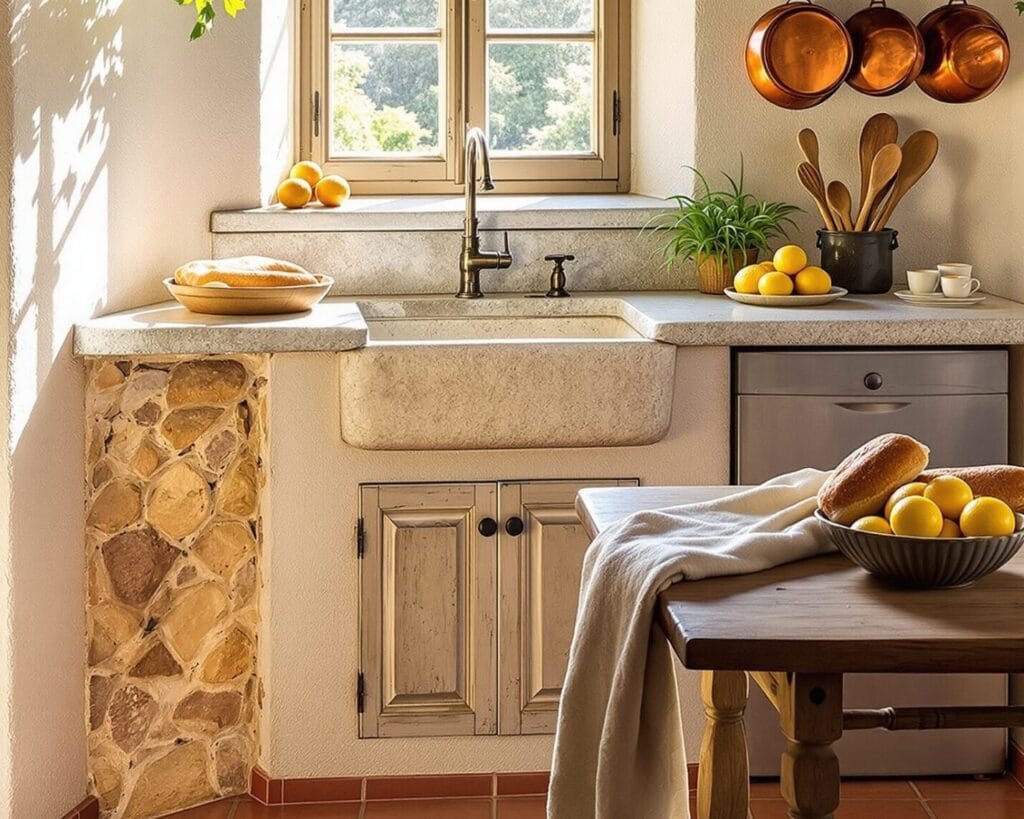
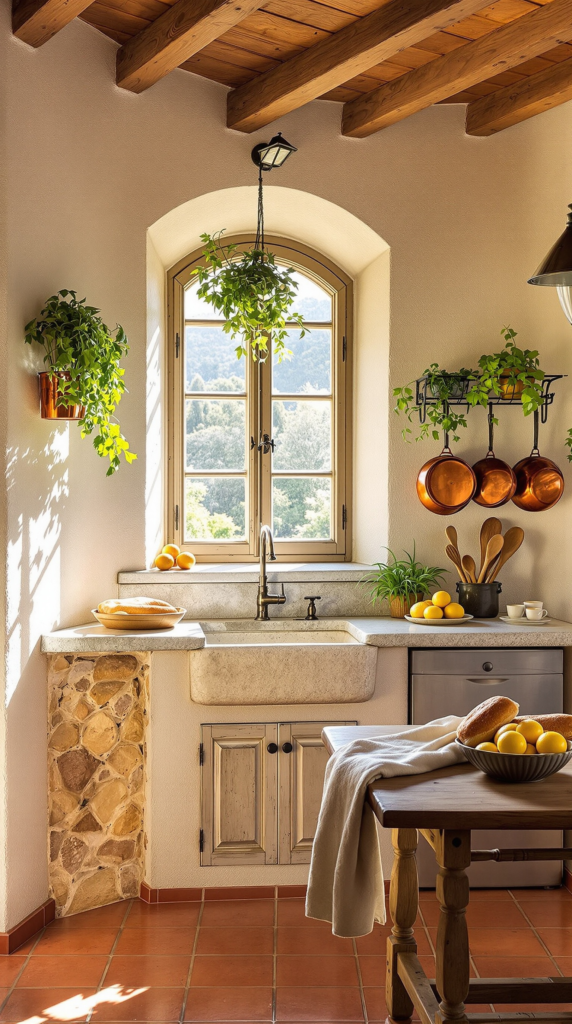
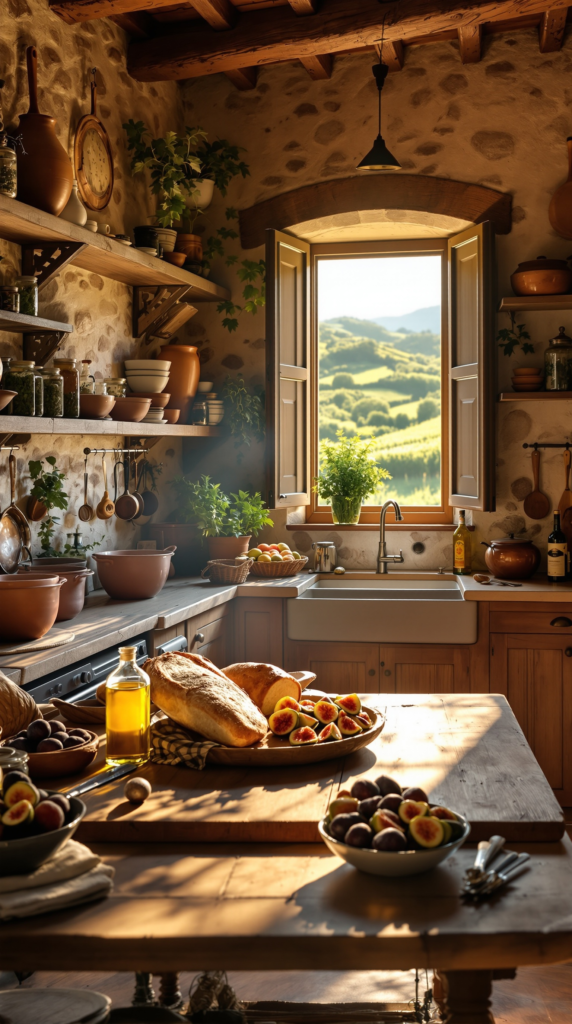
If the French cottage has its romance, the Italian kitchen has its soul. It’s the warmest place in the house — where copper pots hang in sunlight, herbs dry above the window, and the scent of bread and olive oil fills the air.
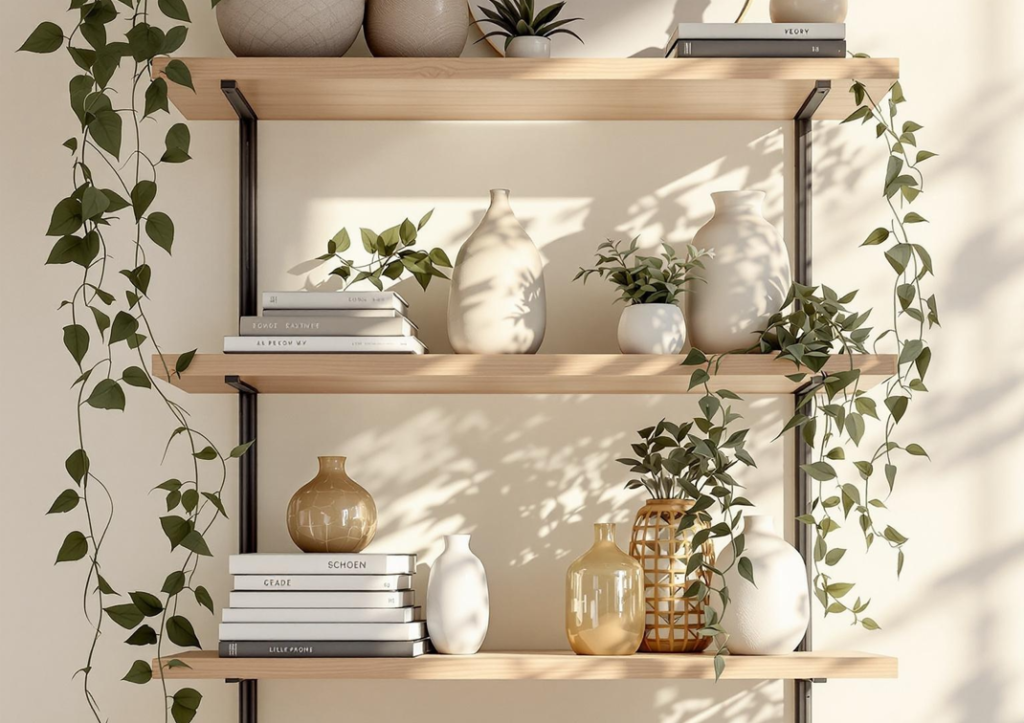
Forget sleek perfection. Think open shelves stacked with earthenware, stone countertops dusted with flour, and bowls overflowing with lemons. The beauty is in the atmosphere — the way light catches on pottery, the rhythm of everyday life unfolding naturally.
Light as a Design Element
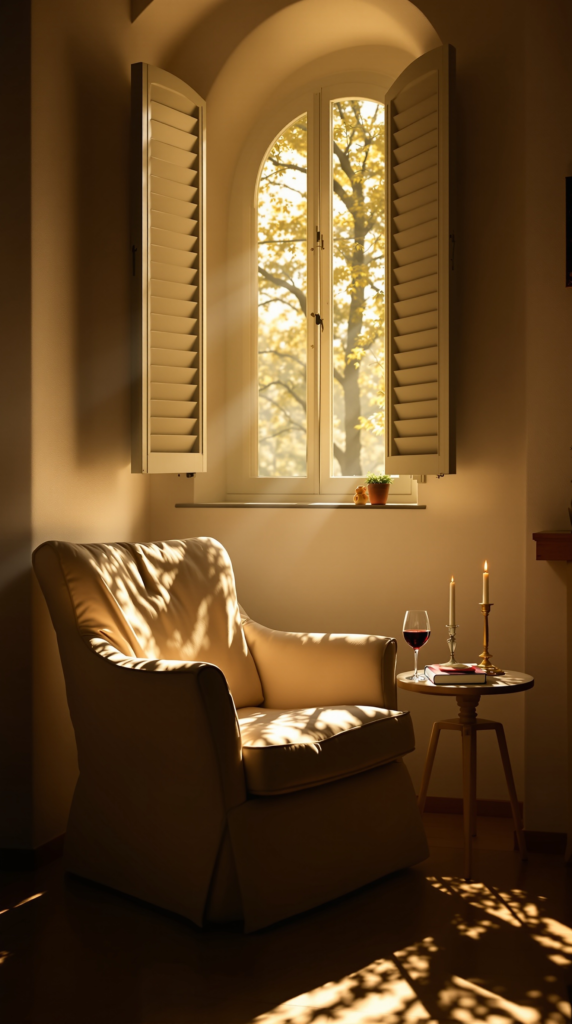
Light in Italy isn’t just functional — it’s emotional. Mornings spill in through wide windows, soft and golden. Afternoons pour over terracotta tiles, making them glow. Evenings dim into amber tones that wrap the house in calm.
Follow that rhythm. Use natural light as your main design tool. Keep windows open and surfaces matte so they reflect light softly.
When night falls, replace harsh ceiling lights with table lamps and candles — letting the home fade gently into the quiet of the evening.
Bringing the Outdoors In
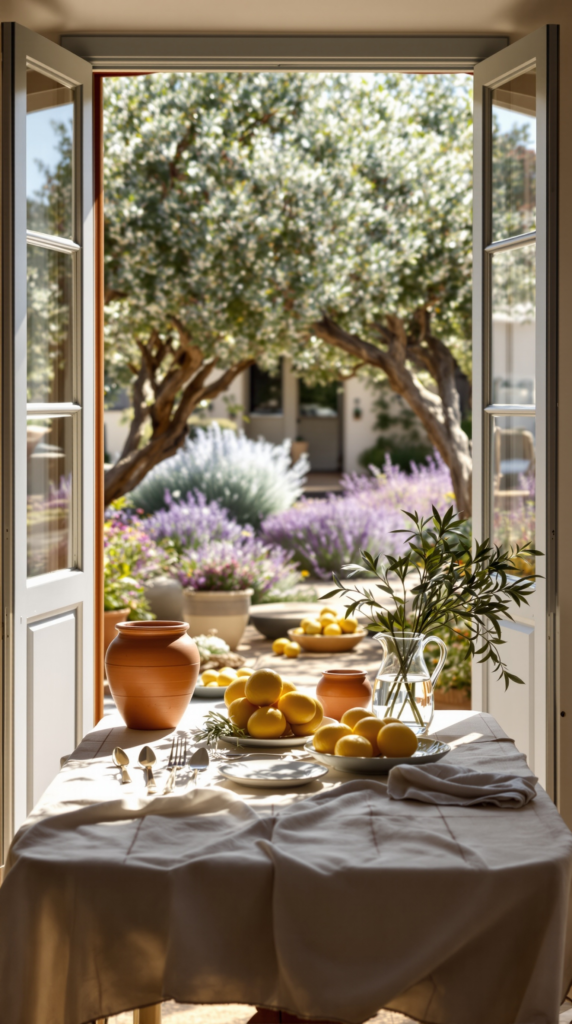
Italian homes blur the line between house and garden. Vines climb over balconies, herbs grow on windowsills, and potted lemons stand near the door. Nature isn’t decoration — it’s part of daily life.
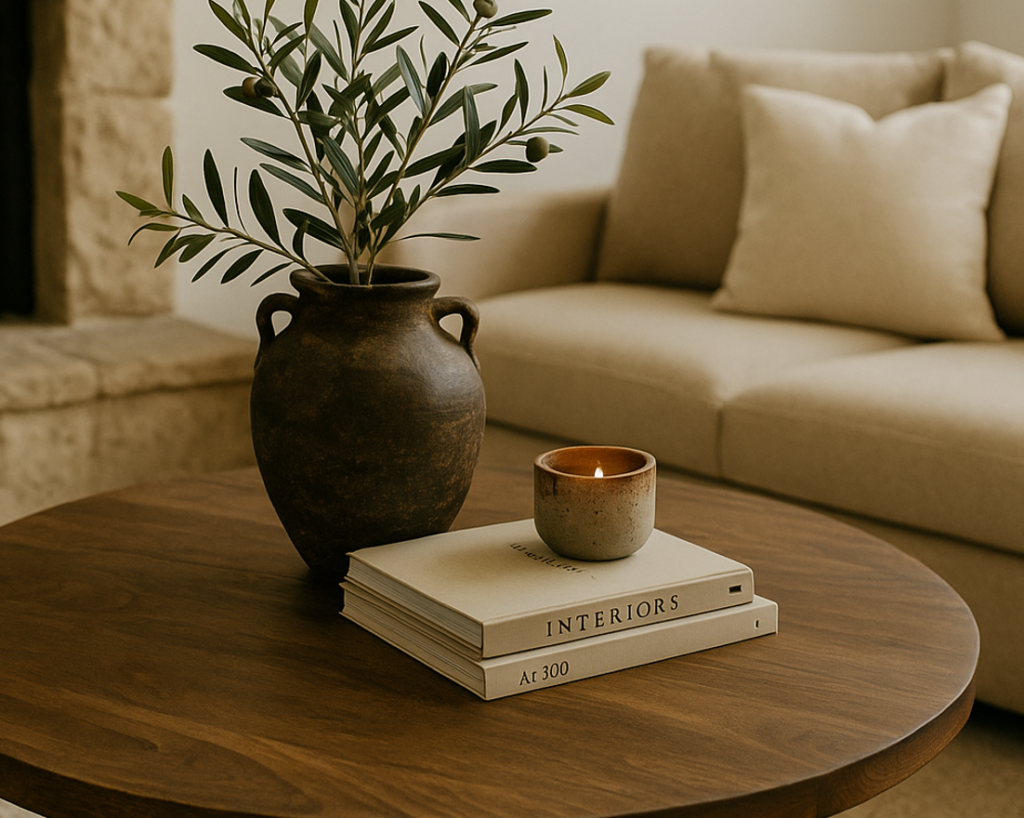
To echo that feeling, use natural textures and organic shapes. Place a small olive tree near the kitchen window, fill rustic jars with wildflowers, or leave a door open to let light and scent drift in. The goal isn’t to recreate Tuscany — it’s to capture its spirit.
Craftsmanship and Details
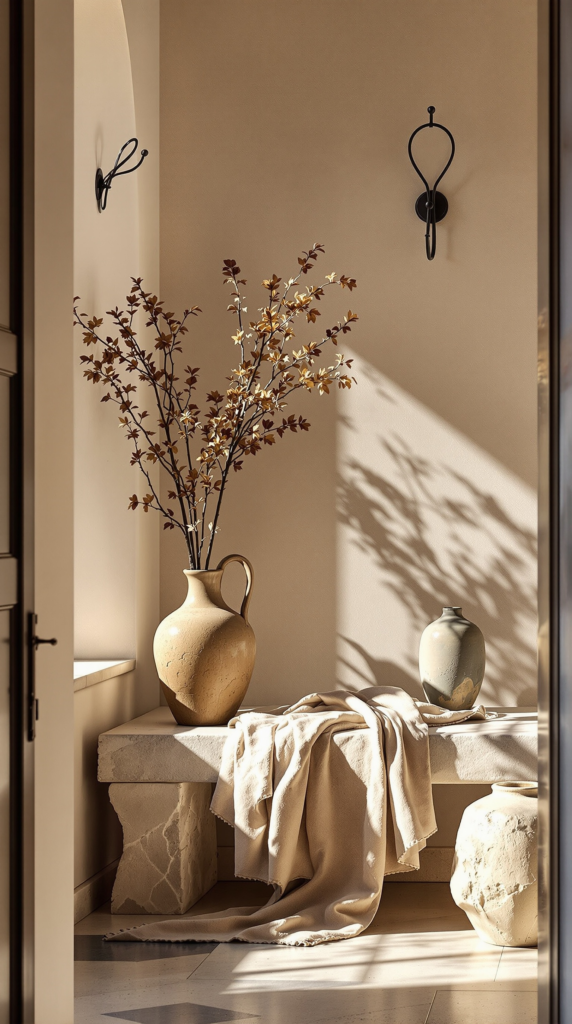
The soul of the Italian home lies in its details. Wrought iron railings, hand-painted tiles, ceramic pitchers, and linen napkins — all crafted by human hands, each slightly imperfect.
Invest in things that last — not many, but meaningful. A handmade clay vase. A set of linen curtains. A chair that feels like it has a story to tell. In the Italian tradition, beauty comes from care, not quantity.
The Art of Slow Living
To live the Italian way is to move at the pace of light and conversation. Mornings stretch long, lunches last hours, and evenings invite laughter. The casale reflects that — a home that encourages pause.
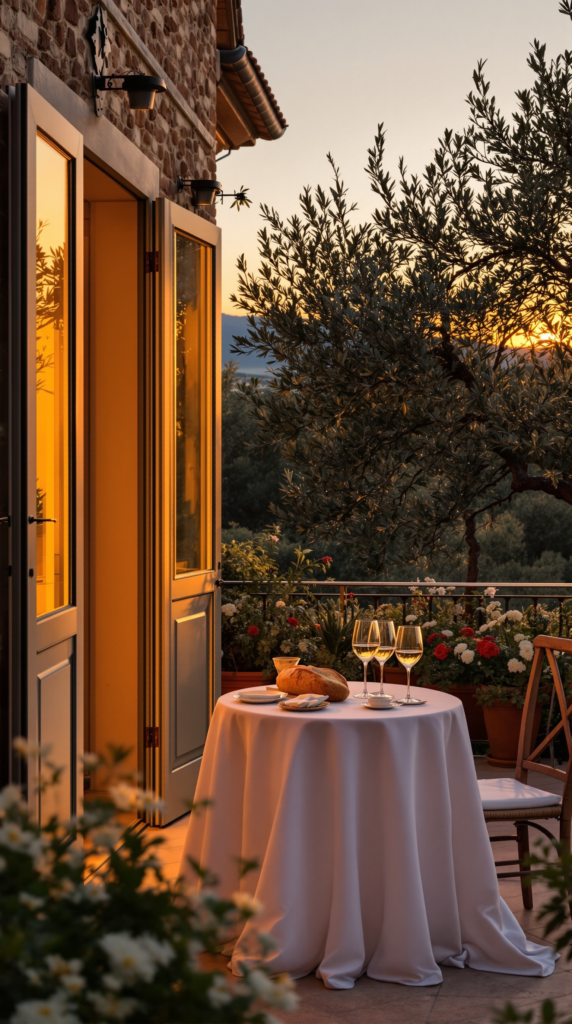
Set a table outside, pour wine even when no one’s coming over, light candles for yourself. Let your home be a place where beauty isn’t something you create — it’s something you notice.
The Warmth That Endures
A French cottage whispers. An Italian casale hums. Both teach us the same truth — that real beauty isn’t found in perfection, but in the life that fills a space.
So open the shutters, let the light in, and live slowly. Because the soft elegance of Italian country living isn’t just a style — it’s a way of being.
For more cottage-inspired style: English Cottage Charm, Room by Room