English cottage style isn’t a theme—it’s a way of living with objects that feel collected, useful, and softly timeworn. Think natural materials, gentle color, pattern that feels familiar, and rooms that invite you to sit down and stay.
This guide takes you room by room with practical moves you can make today—plus thrift tactics and simple DIYs—so a new build, rental, or city apartment can borrow countryside warmth without feeling like a stage set.
Foundations of the Look
Cottage rooms are calm because they repeat a few ideas over and over: real materials, small-scale pattern, and signs of use. Start with a softened palette—creamy whites, buttermilk, sage, olive, dusty rose, faded cornflower, a touch of butter yellow—with inky accents from iron and stove black. Patterns should mix ditsy florals, ticking stripe, gingham, and toile, but keep to three per room and vary the scale.
Materials are honest: pine, oak, elm; linen, cotton, wool; wicker, rush, rattan; stone and brick; brass and copper that actually tarnish. A plain backdrop with patterned textiles and one vintage showpiece always works.
So does soft color on the walls with open storage and baskets for texture. For pattern, try a floral, a stripe, and a solid. Sourcing is half the look: choose secondhand when you can. Real wood, natural fibers, unlacquered metals, and repairable lighting give you the depth and patina new pieces can’t match.
The Kitchen
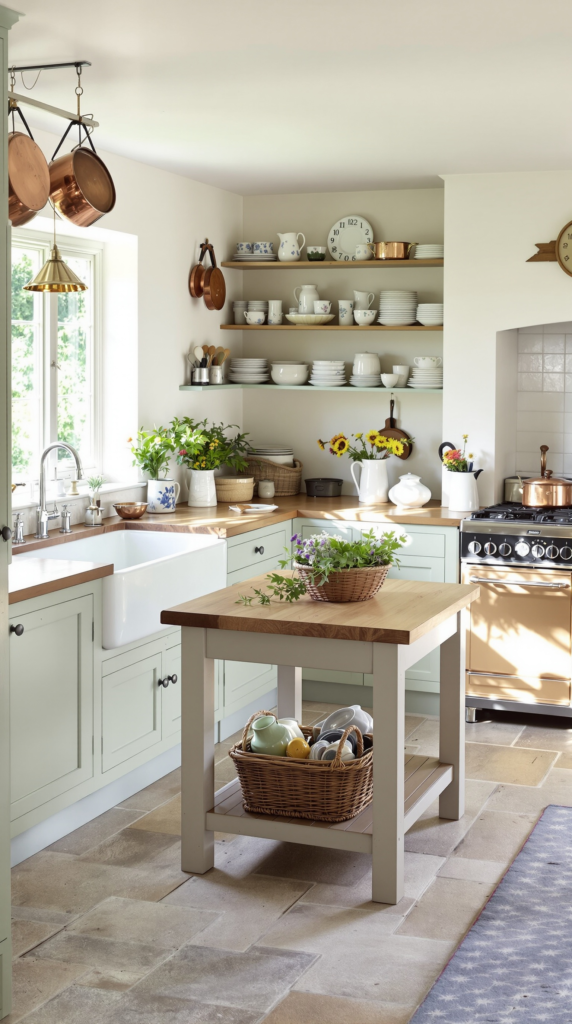
Anchor the room with furniture-like pieces: a scrubbed pine table, a freestanding larder, a peg rail lined with tea towels. Painted cabinetry in sage or cream pairs well with beadboard panels and open plate racks.
If you can’t redo cabinets, change the hardware—porcelain or brass knobs—add a café curtain under the sink, and bring in a small lamp on the counter for evening glow. Stack breadboards, keep a crock of wooden spoons, display jars of oats and lentils, and pot up herbs like thyme or rosemary.
Copper pans, if thrifted, age beautifully and read “real kitchen,” not showroom. Rental-friendly wins include peel-and-stick beadboard, tension-rod sink skirts, peg rails, and hardware swaps you can reverse. A narrow vintage dresser can become the prettiest dry-goods pantry—line drawers, add shelf paper, label jars.
The Living Room
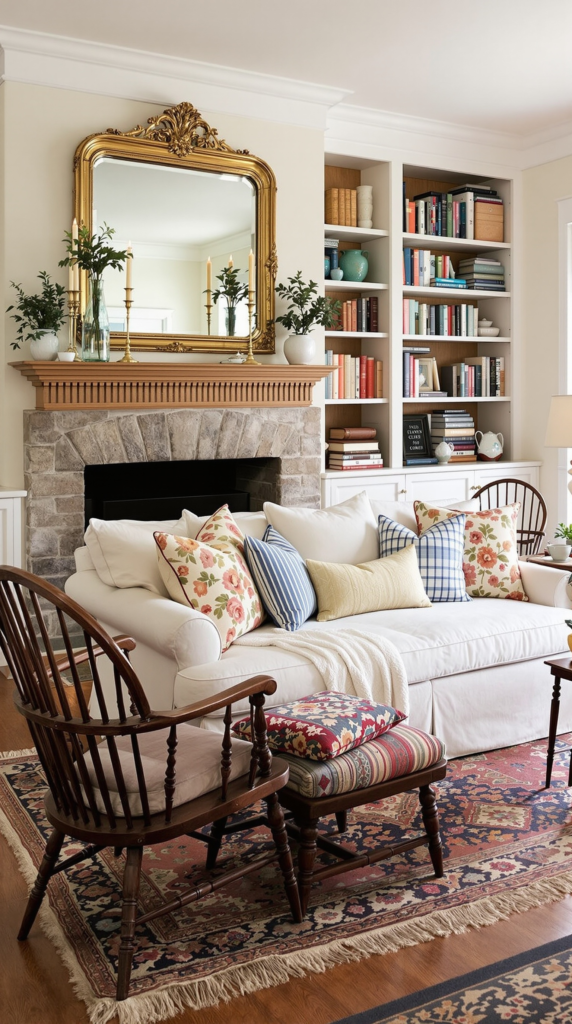
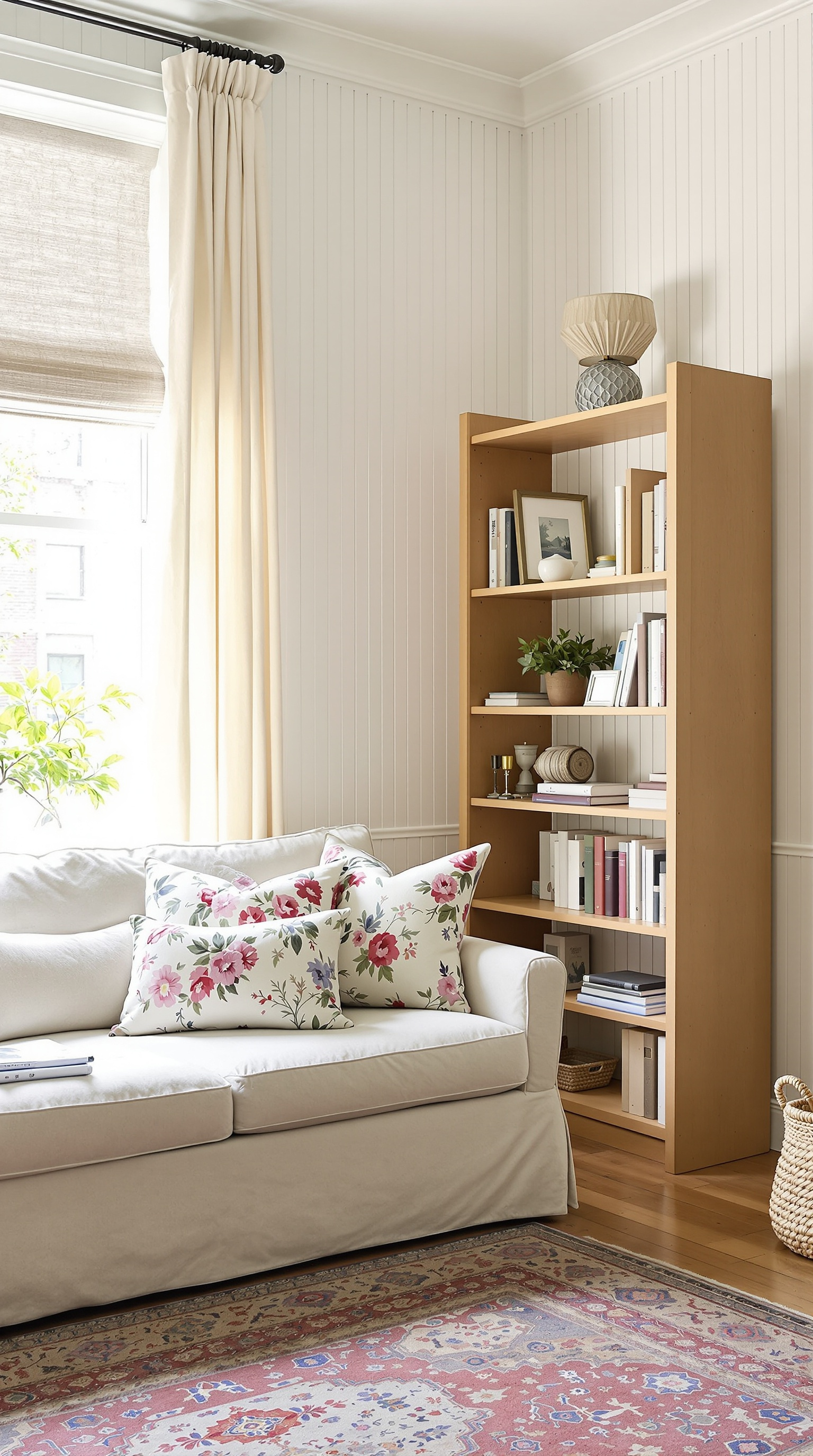
Start with a slipcovered sofa in cotton or linen; it’s forgiving and washable. Add pillows that mix a tiny floral, a ticking stripe, and a solid wool or velvet. Underfoot, layer a jute or sisal rug with a smaller vintage Persian or wool rug for warmth and pattern.
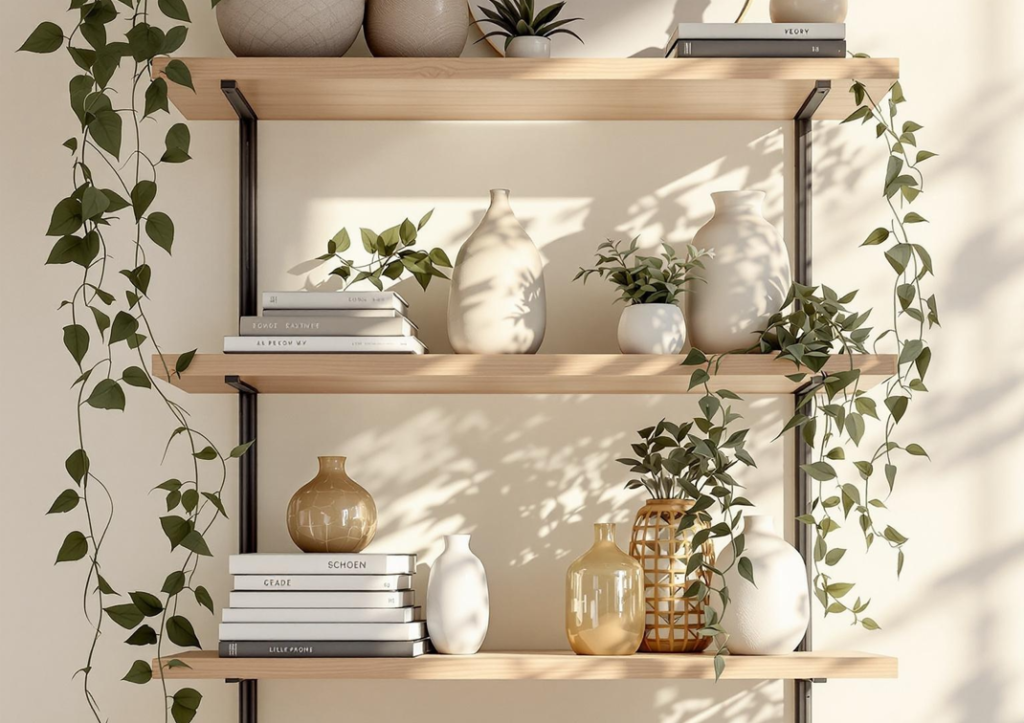
Walls love matte paint or limewash and a gallery of small artworks: pressed botanicals, antique landscapes, portraits, or even framed book plates. Low bookcases, a glass-front cabinet for china or books, and a trunk as a coffee table reinforce the collected feeling.
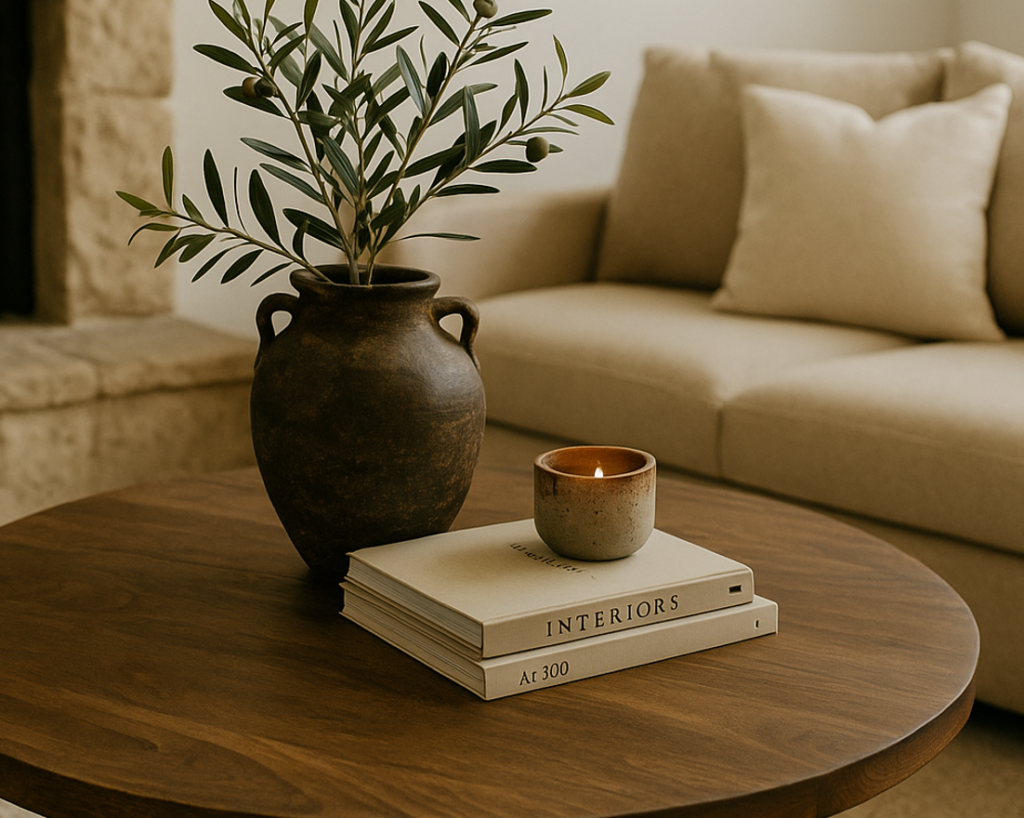
A coffee table styled with a stack of books, a brass candle, and a small jug of garden flowers always works, with a basket underneath for throws. Swap modern drum shades for pleated fabric, lean a vintage mirror on the mantle, and drape a quilt over the sofa back for instant atmosphere.
The Bedroom
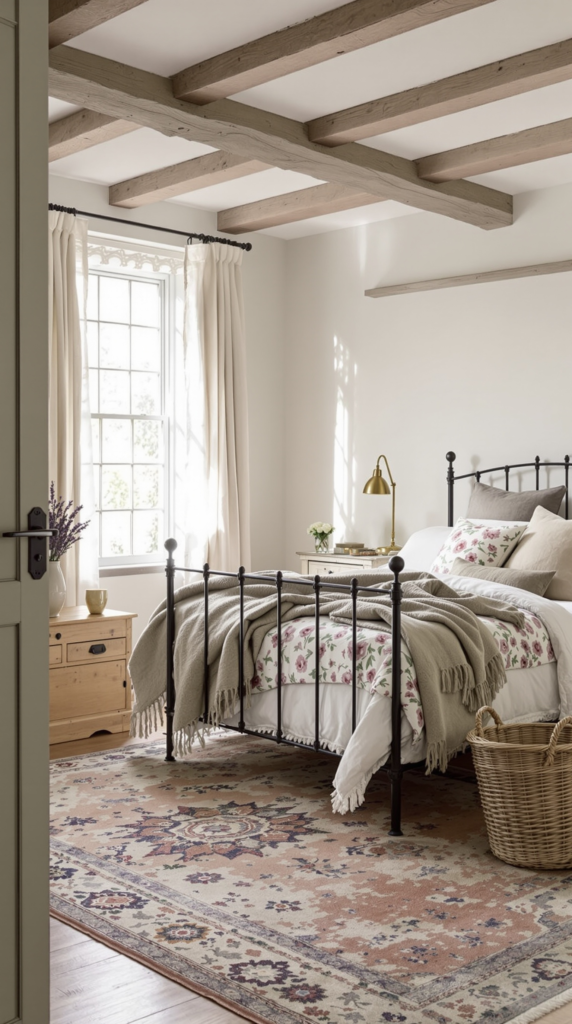
An iron bed or a painted wood headboard instantly sets the tone. Layer a floral duvet with a wool blanket and a quilt folded at the foot; add a ticking or ruffled bed skirt if you like softness. Bedside tables don’t need to match—keep the heights similar and give each a petite lamp with a fabric shade.
Curtains should filter light rather than block it completely—linen, lace, or café panels. A basket for slippers, lavender sachets in drawers, and one small tray with a bud vase and book finish the story. To create a romantic backdrop in a rental, hang a single fabric panel behind the bed with removable hooks.
The Bath
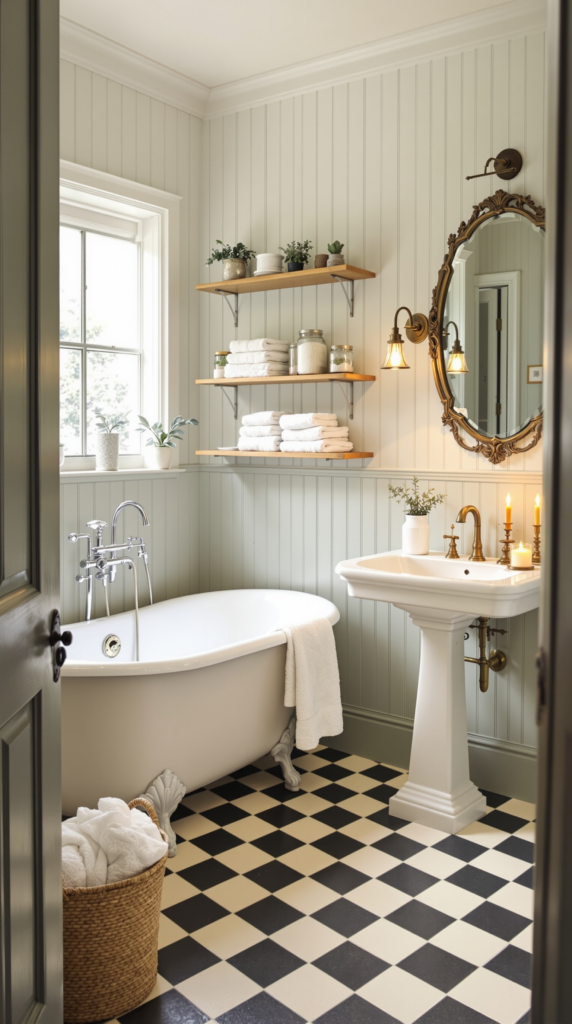
If you can change fixtures, a pedestal sink and cross-handle taps look timeless. If not, beadboard half-walls and a checkerboard floor, even painted, go a long way. Swap the frameless mirror for a vintage framed one, add a peg rail for towels, and store salts and soaps in apothecary jars.
A gingham or stripe shower curtain, a wicker laundry basket, and a small wooden stool with a plant or folded towel bring warmth to all that tile.
Entry and Hallway
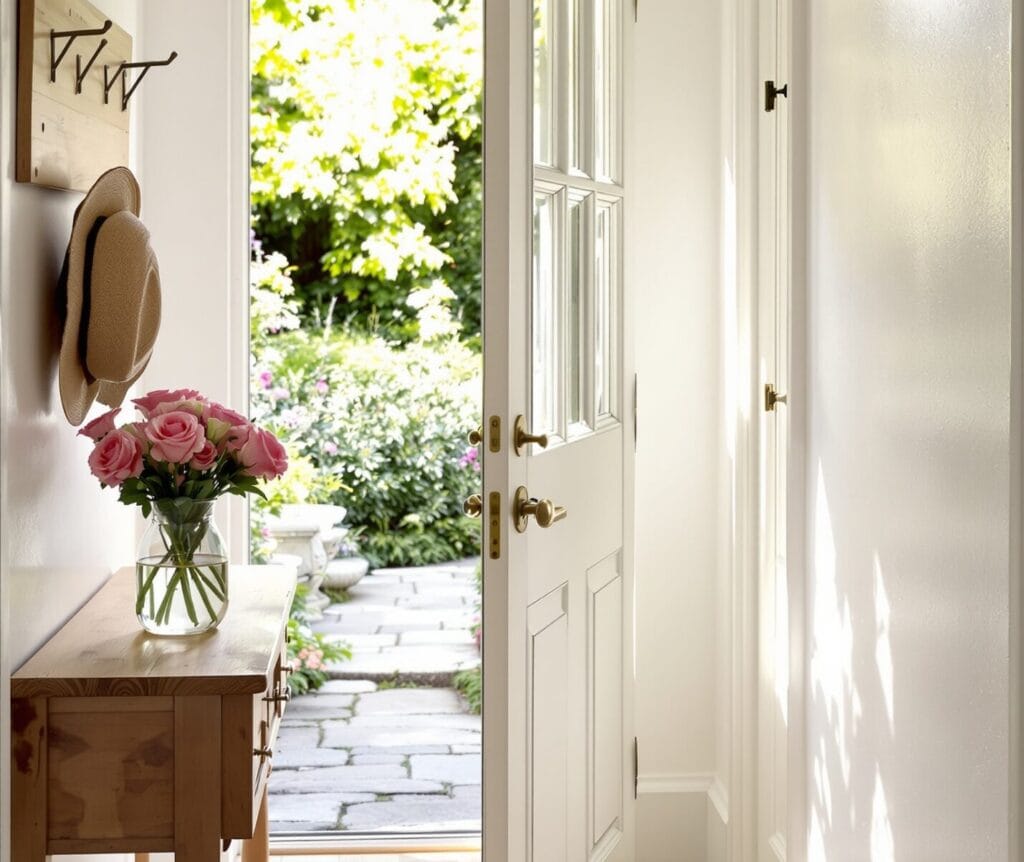
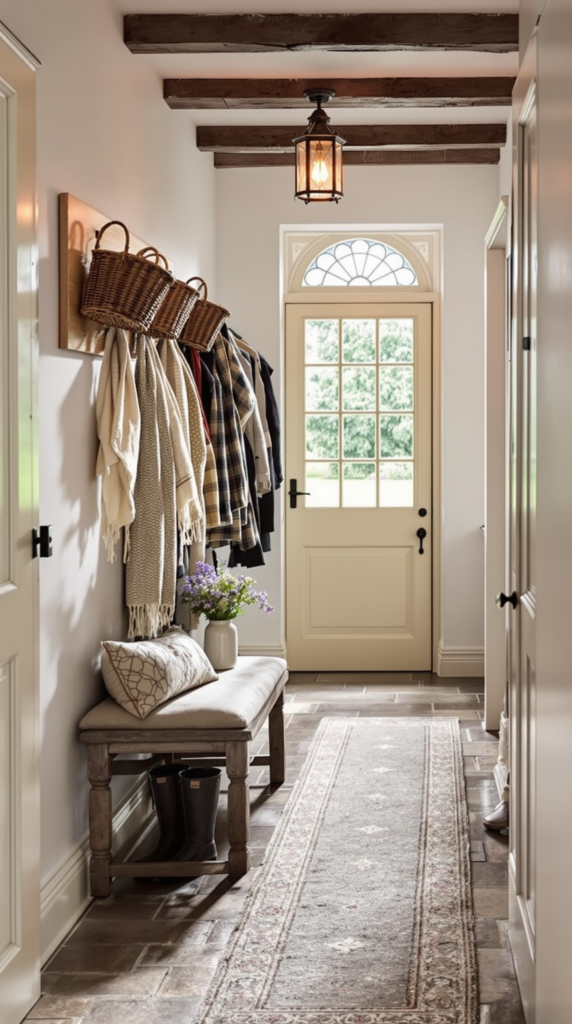
Keep it useful and welcoming: a narrow pine console, a peg rail with coats and baskets, an umbrella stand, a boot tray. Hang a modest antique mirror and place a small bowl for keys. A runner in wool or braided jute handles traffic gracefully. A crock with walking sticks, a tiny posy in a jam jar, and one framed cottage print complete the vignette.
Dining Space
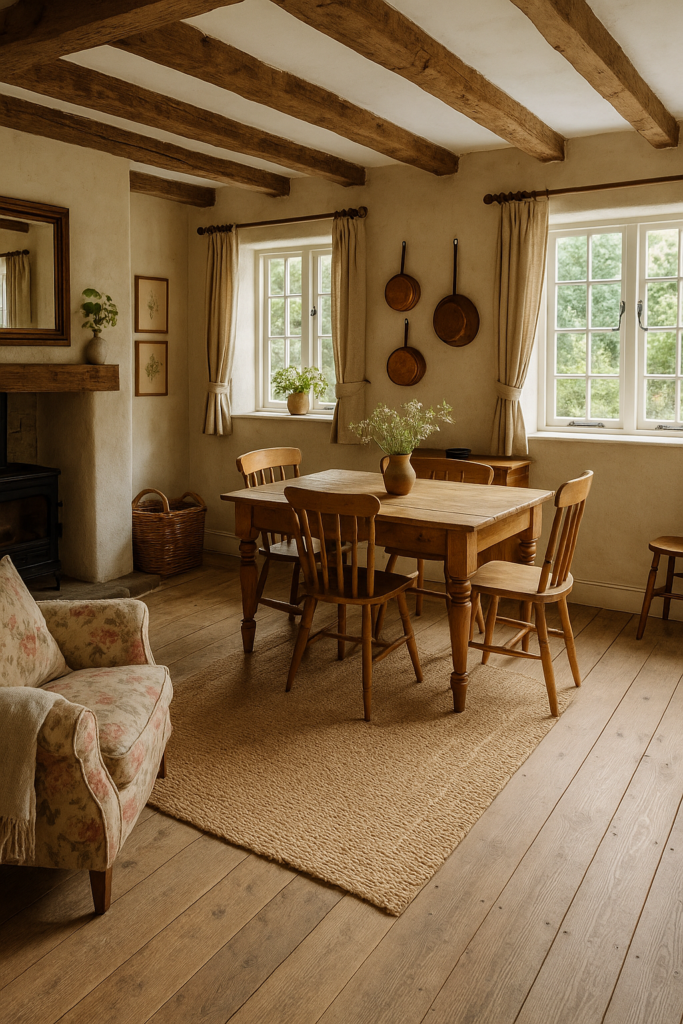
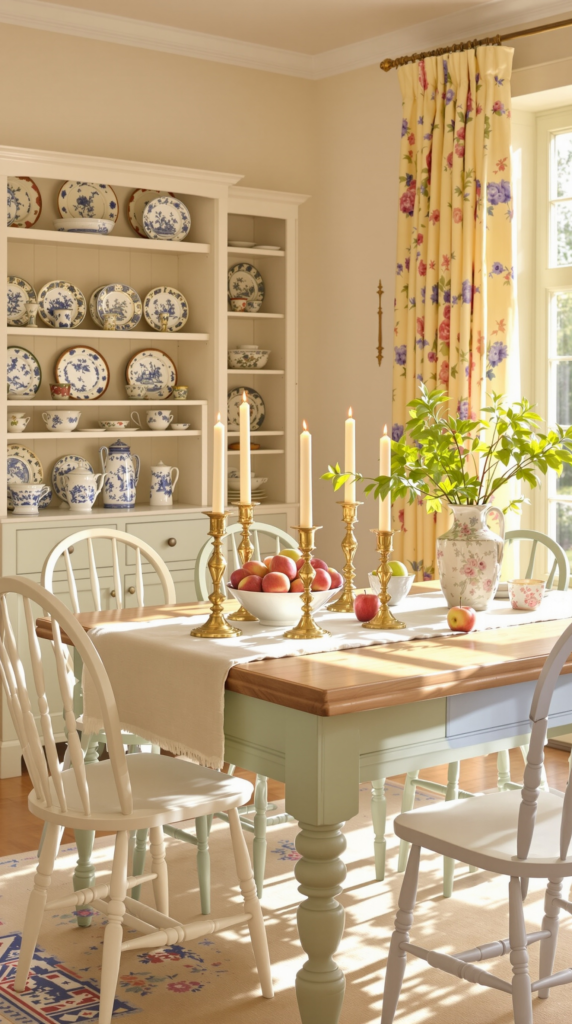
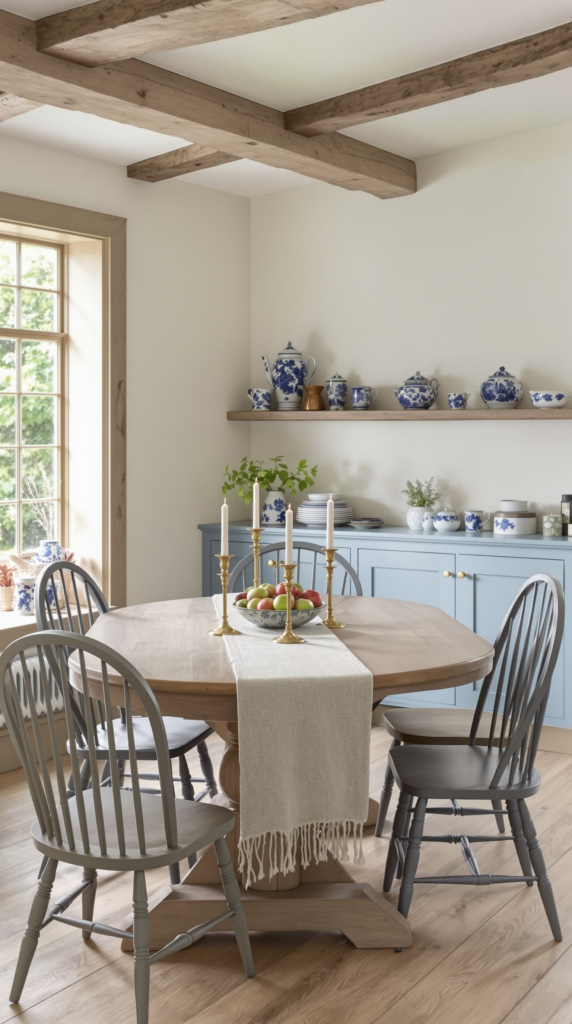
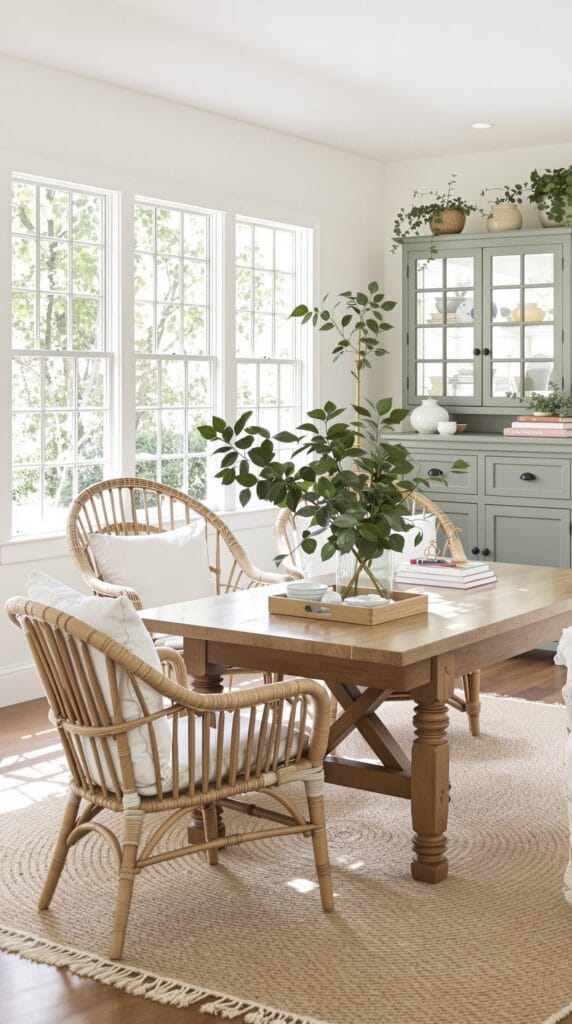
The most cottage choice is a scrubbed pine table with mismatched wooden chairs. Dress the table with a linen cloth or runner, ironstone or mismatched floral china, and brass candlesticks. Keep lighting low—a pendant over the table, candles in the evening.
On the wall, a plate rack or picture ledge with rotating art provides easy seasonal changes. In tight quarters, a built-in or freestanding bench with cushions turns a corner into a breakfast nook.
A Corner for Reading
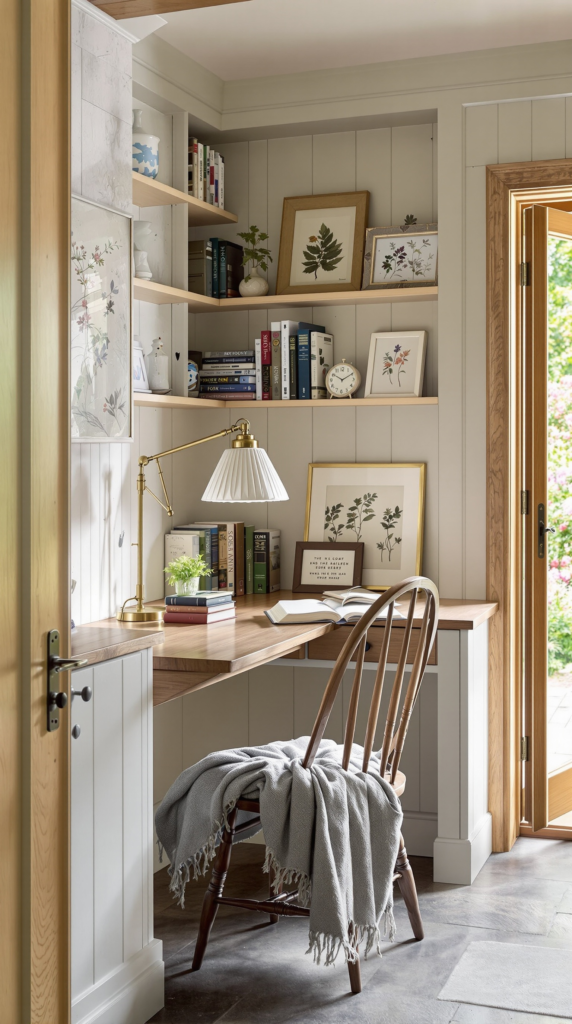
You only need three things: a small writing desk or skirted table, a Windsor or spindle chair, and good lamp light with a pleated shade. Surround with book stacks, a cork board pinned with postcards, and a wool throw over the chair back. It’s the easiest “room” to add to any home.
Laundry and Utility Room
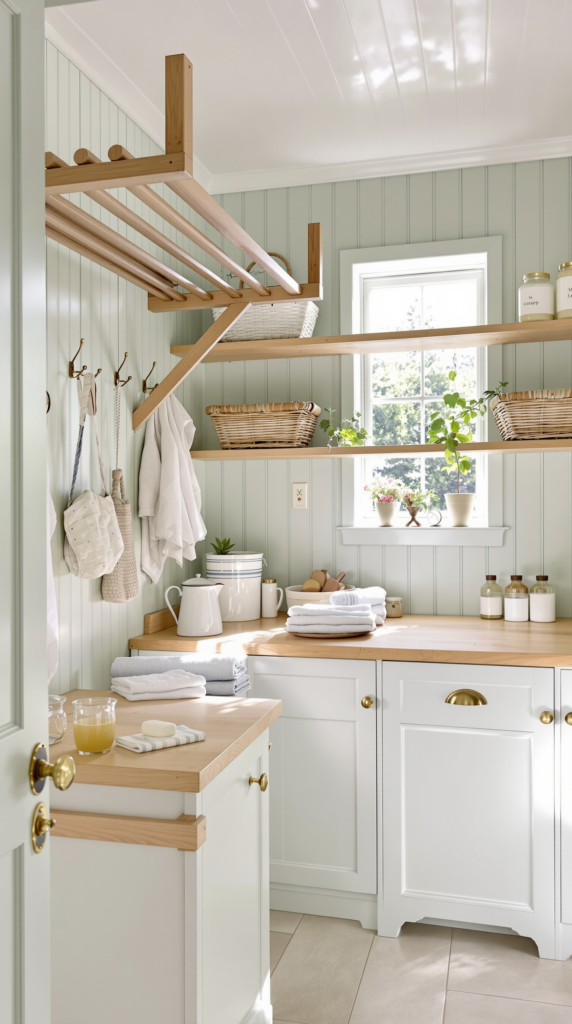
Lean into function with charm: a ceiling drying rack or fold-down version, peg rails for aprons and brooms, open shelves with baskets for soap and cloths.
Beadboard or painted brick, an enamel pitcher, and a striped runner pull humble spaces into the cottage fold. Skirt a counter to hide machines, and store powders in labeled jars.
Bringing the Garden Inside
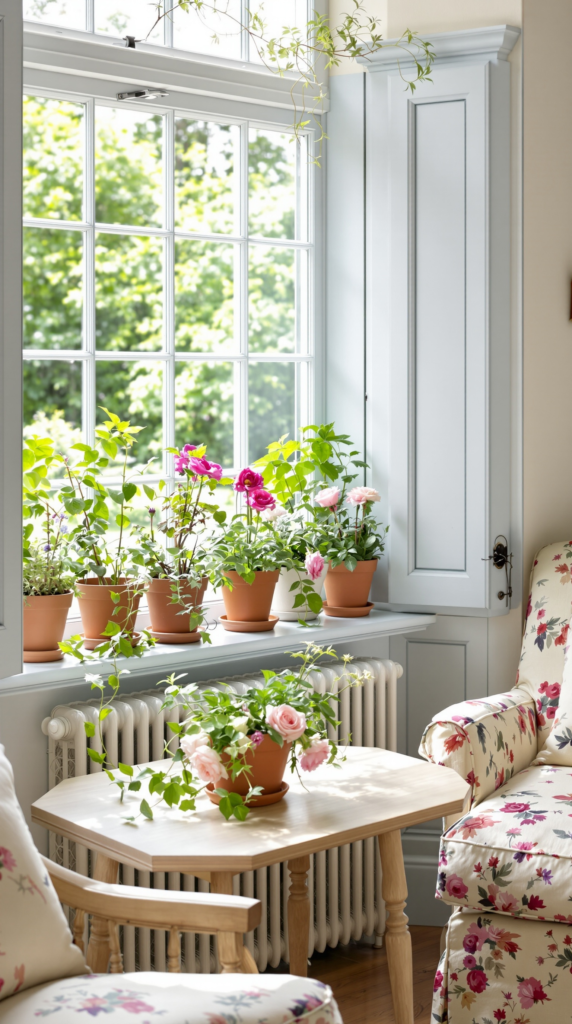
Cut what you have and style it simply: roses or herbs in enamel jugs, cow parsley or foxgloves in jars, terracotta pots on the sill. A shallow earthenware bowl with pears or apples is both centerpiece and snack. Cottage style is always at least a little horticultural.
Cottage Style in a Rental
Use soft goods and freestanding pieces to do the heavy lifting: peel-and-stick beadboard or tile, tension-rod café curtains, fabric panels velcroed to walls or wrapped over headboards, étagères and armoires for storage.
Hide modern clutter with baskets, a skirted console, and fabric cord covers. Choose a small number of repeatable elements—pleated shades, peg rails, ironstone, gingham—and echo them in each room for coherence.
Mixing Pattern with Ease
Limit yourself to three patterns per room: one floral, one stripe or gingham, one solid or textured. Vary scale: big on curtains or duvet, medium on sofa, small on pillows.
Keep undertones consistent across colors. Repeat one key hue from room to room—sage or dusty rose—so the house feels like a whole.
Hunting for Treasures
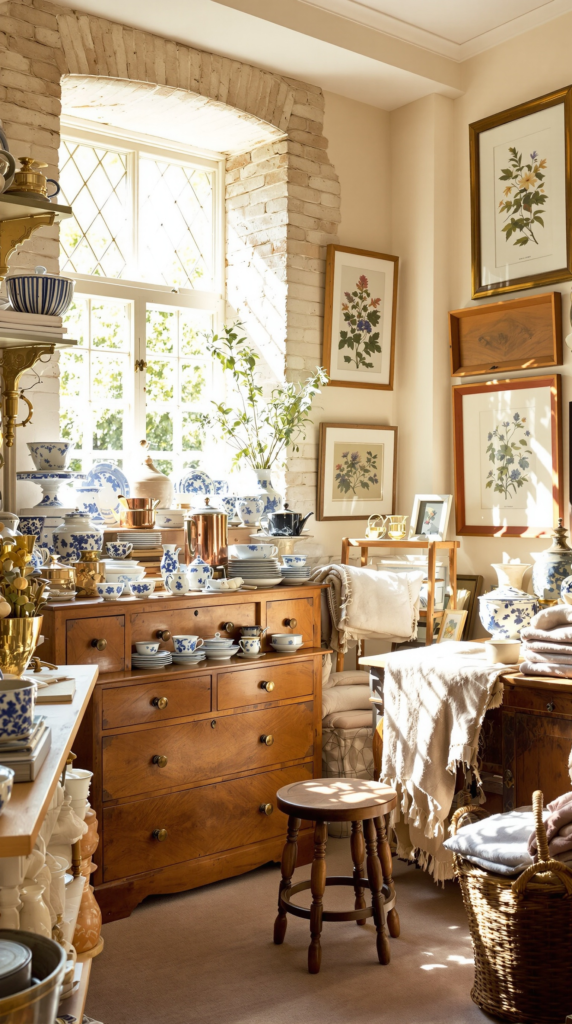
Charity shops, car-boot and estate sales, small auctions, and the back shelves of antique malls are where the best finds hide. Grab oil landscapes, blue-and-white transferware, ironstone serving pieces, copper pots, elm stools, rush-seat chairs, wool blankets, pleated lampshades, botanical prints, breadboards, and brass candlesticks when you spot them.
Check for solid wood and dovetail joints, natural fibers in textiles, and be ready to rewire old lamps. A little mineral oil refreshes wood, Bar Keepers Friend revives copper, and a gentle wash in sun brings wool back to life.
Simple DIY Touches
A pine board with shaker pegs and simple wall brackets becomes a peg rail with shelf—paint to match your trim and it’s instantly useful. Skirt a table or console with hemmed fabric and Velcro for hidden storage. Wrap a plain drum shade in fabric, folding soft pleats and finishing with bias tape for a quick pleated lamp upgrade.
For a limewash look, thin mineral paint with water and cross-hatch with a wide brush. To age bright brass, suspend it over warm vinegar fumes (not in the liquid) to start a natural patina.
Common Mistakes and Quick Fixes
Avoid turning the look into a costume. If everything is floral, add plain linen and scrubbed wood for balance. Edit collections so surfaces can breathe.
Mix true vintage with new to keep depth. Swap harsh blue light for warm bulbs and fabric shades. Choose three or four colors for the whole home and test them under different light so the palette flows.
Budget Roadmap
For no-spend charm, shop your home, forage cuttings, press botanicals, swap lamp shades, or make tea-towel café curtains.
With fifty to two hundred dollars you can layer small rugs, add pleated shades, bring home vintage art or ironstone, and upgrade hardware. Bigger investments—solid-wood dining tables, handmade quilts, quality slipcovers, classic brass lamps—become heirlooms.
Closing Thoughts
Cottage style thrives on use—the breadboard with knife marks, the wool blanket that’s actually warm, the jug that sometimes holds flowers and sometimes spoons. Build your rooms slowly with what’s real, secondhand, and worth keeping.
Start with a peg rail, a pleated lamp shade, or a plate rack. Add a sprig of something from the garden. In a few small moves, your home will feel softer, more personal, and unmistakably cottage—no thatched roof required.
You may also like: How to Get the Modern Farmhouse Look