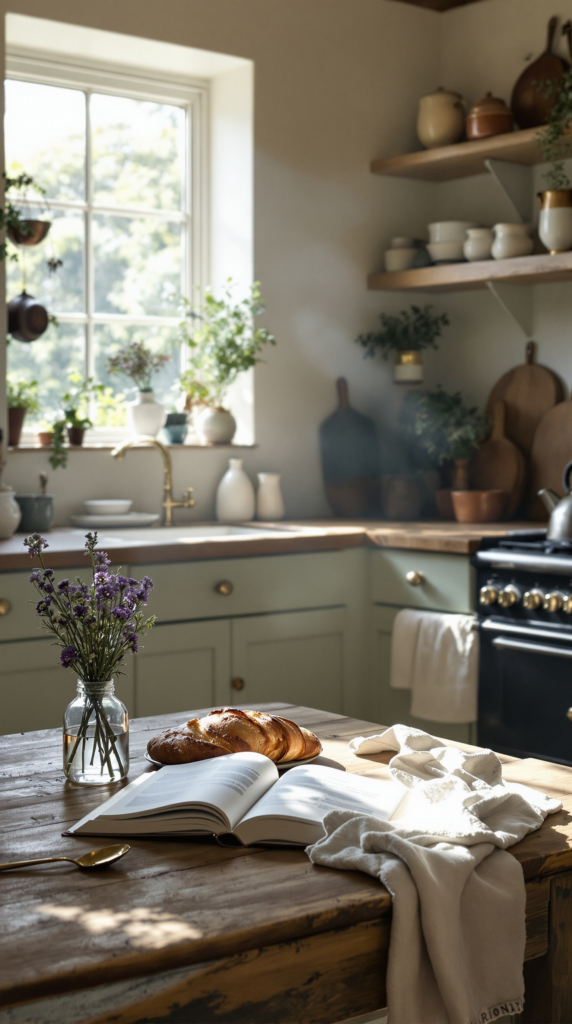
Once upon a time, the farmhouse stood for everything we admired about honest living — its weathered wood, its unpolished charm, its steadfast practicality. The walls bore marks of use, not style. The table in the kitchen was for work and for family, scratched by countless dinners and sunlight spilling in through bare windows.
It was beautiful not because it tried to be, but because it simply was.
But somewhere along the way, our homes began to shift. The world sped up. Life became louder, faster, more digital — and people started craving spaces that slowed them down again. Out of that longing came something new, yet deeply familiar: the modern cottage.
If the farmhouse was strength, the modern cottage is grace.
If the farmhouse spoke in earthy tones, the cottage whispers in soft ones.
This is the story of how rustic design evolved — and how the farmhouse learned to breathe.
The Honest Soul of the Farmhouse
Before Pinterest boards and interior design shows, farmhouse style existed purely out of need. It was born in fields, barns, and kitchens where every item served a purpose. A sturdy table wasn’t a statement — it was survival. A handmade quilt wasn’t curated — it was comfort.
That practicality is what gives farmhouse design its soul. It’s a reminder that beauty doesn’t have to be perfect. A knot in the wood, a nick in the paint — these weren’t flaws, but stories. The farmhouse look grew out of authenticity: raw materials, honest craftsmanship, and an appreciation for what time leaves behind.
Think of those hallmark elements we still love today:
- Wide plank floors that creak with memory
- Exposed beams that speak of labor and history
- Iron fixtures and shiplap walls that frame a life of simplicity
It was the look of home before “style” even entered the conversation.
A Softer Light
As farmhouse design spread beyond the countryside into cities and suburbs, it began to change. People adored the warmth and authenticity but wanted a look that felt gentler, more serene, and emotionally comforting.
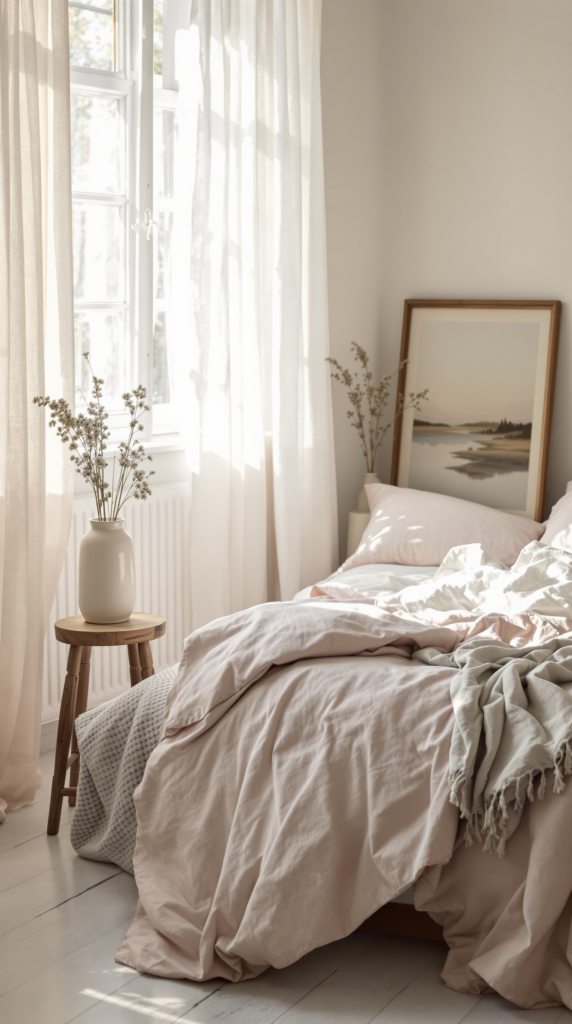
The result was a transformation — the farmhouse began to soften. Industrial edges gave way to natural curves. Dark stains faded to whitewash. Instead of weathered timber and galvanized metal, homeowners reached for linen, wicker, and soft paint tones.
And just like that, the modern cottage was born.
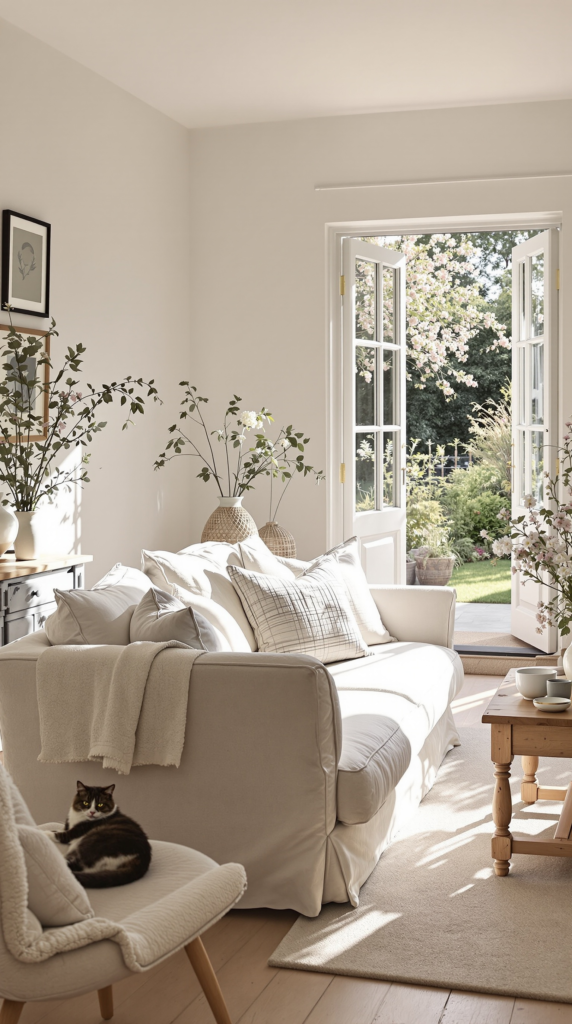
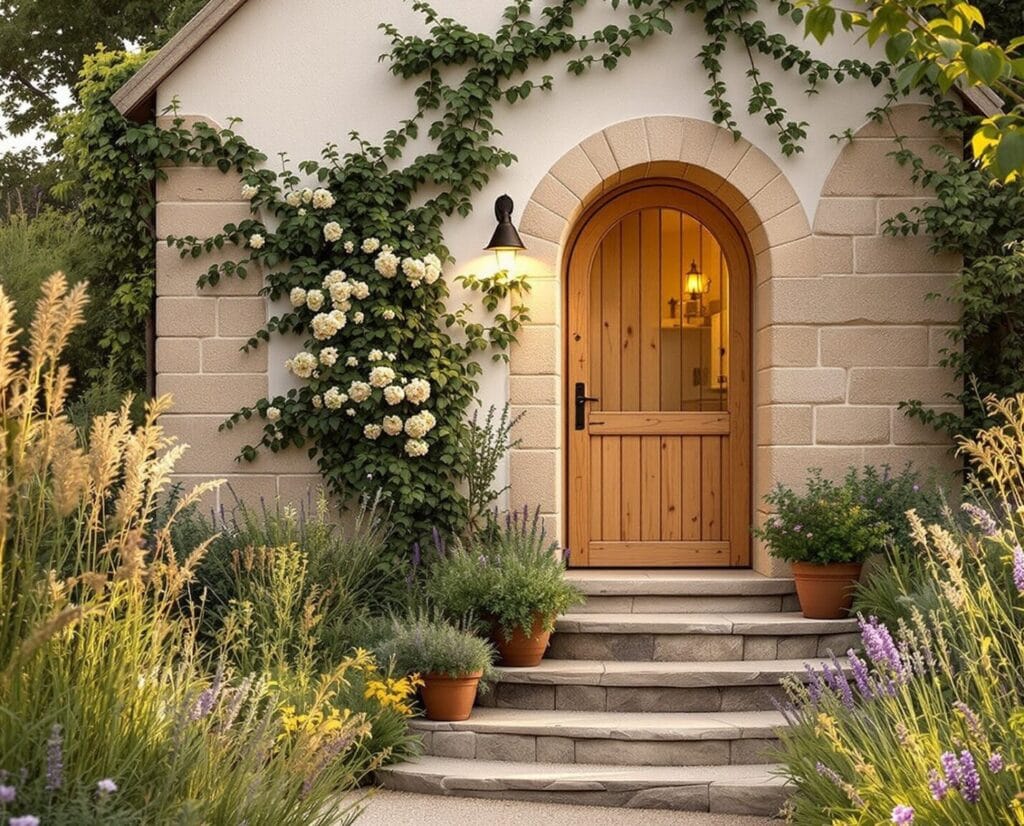
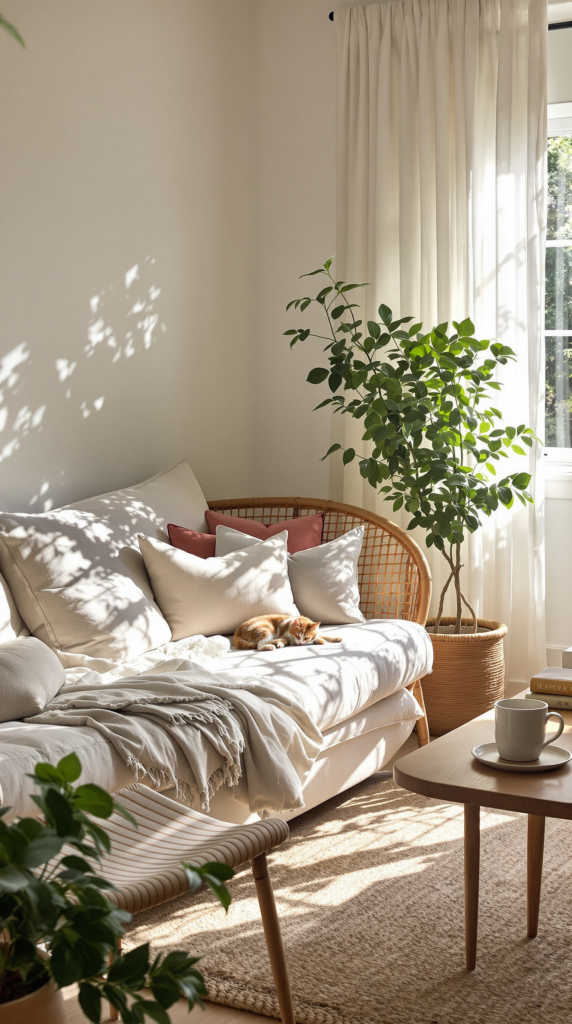
The modern cottage carries the same heart as the farmhouse but trades grit for grace. It’s a home that feels airy, intimate, and alive. A place where you can open the windows, let the breeze dance through linen curtains, and feel time slow down for a moment.
The Modern Cottage Mood
- Painted woods and powdery neutrals that calm the eye
- Textiles in cotton and linen that invite touch
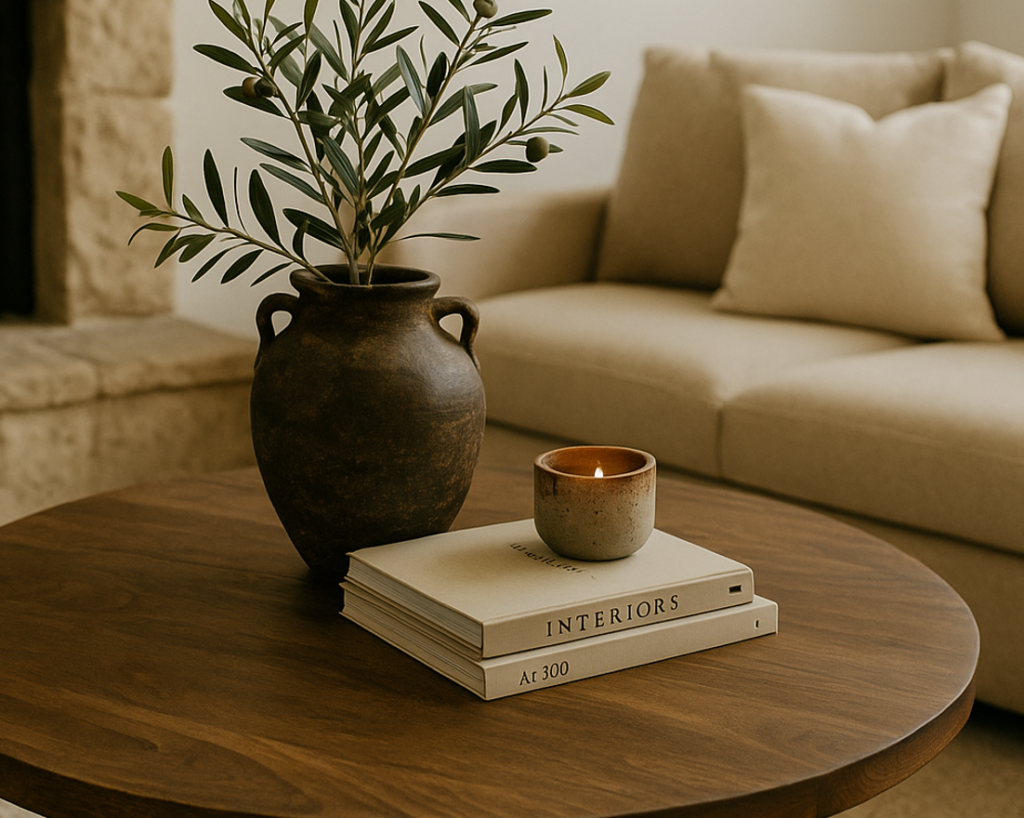
- Curved edges, handmade pottery, and vintage finds that tell quiet stories
It’s rustic design reimagined as a gentle sigh — familiar, yet tenderly new.
From Grit to Grace
Farmhouse and modern cottage design are like sisters raised under the same sky — one grounded and practical, the other dreamy and poetic. They share roots, but their personalities couldn’t be more different.
The farmhouse is a workhorse: tough textures, bold contrasts, and a no-nonsense spirit.
The modern cottage is a daydreamer: soft pastels, curved lines, and an affection for imperfection.
| Feature | Farmhouse | Modern Cottage |
|---|---|---|
| Mood | Rugged, grounded, practical | Airy, nurturing, nostalgic |
| Palette | Neutrals with dark contrast | Whites, creams, pastels |
| Texture | Reclaimed wood, metal, leather | Linen, rattan, cotton |
| Décor | Industrial, straightforward | Whimsical, handmade |
| Feeling | Strong and functional | Gentle and comforting |
The shift isn’t just visual — it’s emotional. Farmhouse design feels like a handshake. Modern cottage feels like a hug.
When a Farmhouse Learns to Dream
For many homeowners, the evolution from farmhouse to modern cottage happens naturally. It’s not about tearing down what’s there — it’s about softening it. Think of it like tuning an instrument: the melody remains, but the tone becomes warmer.
Here’s how that transformation takes shape:
Let the Light In
Swap heavy curtains for linen sheers. Replace dark-stained furniture with lighter woods or painted finishes. The goal is to let your home breathe. Even the smallest touch — like adding a mirror opposite a window — can make a space feel open and alive.
Trade Iron for Earth
Move away from the hard edges of black metal and toward organic materials. Try woven baskets, terracotta planters, stoneware mugs, and ceramic lamps. Texture is key — but now, it’s about softness, not toughness.
Add the Human Touch
Layer textiles that invite comfort. A hand-knit throw, a quilted cushion, a weathered rug. Mix and match patterns, but keep the colors harmonious and subdued. Modern cottage interiors aren’t sterile — they’re delightfully human.
Embrace Whimsy and Character
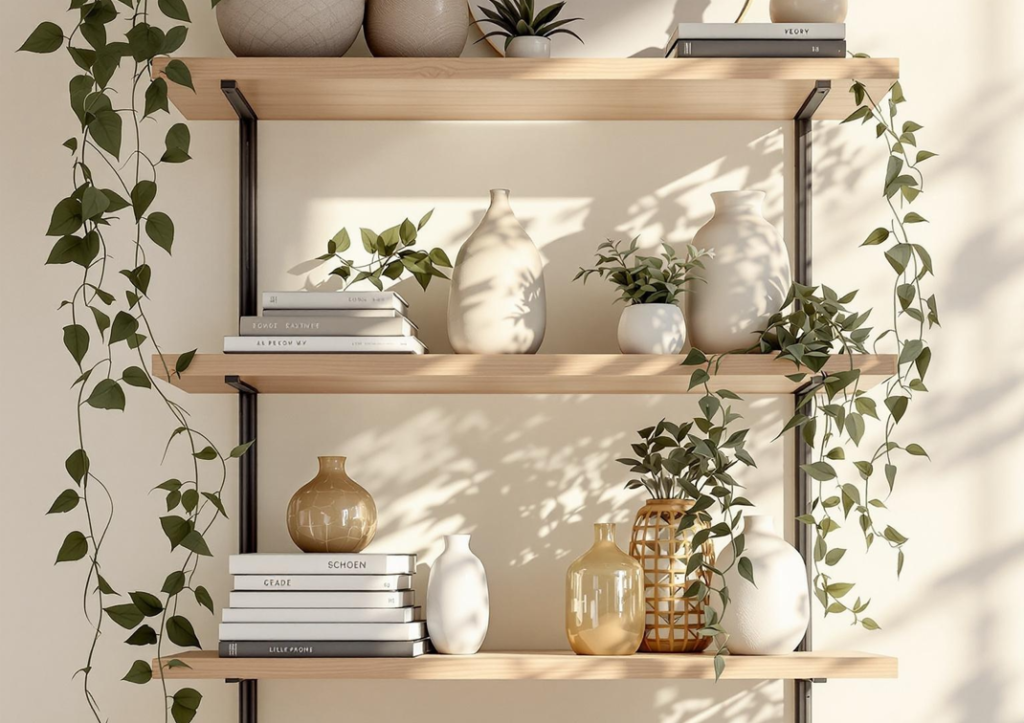
Where farmhouse relied on utility, cottage thrives on personality. A floral teacup on an open shelf, a thrifted painting in a gold frame, a vase of wildflowers from the garden — these small details make the space feel alive.
In essence, you’re not replacing the farmhouse spirit — you’re giving it permission to dream.
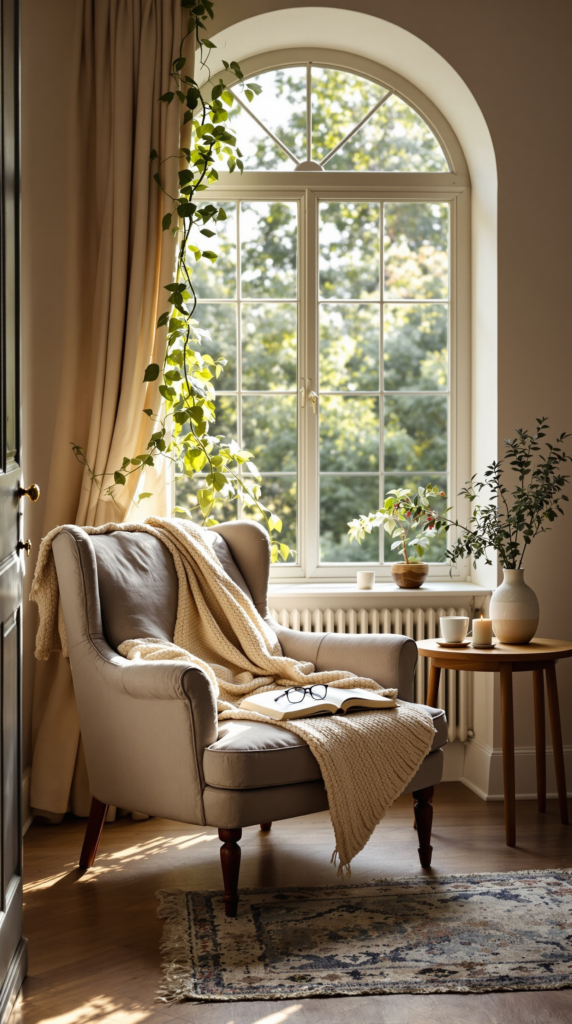
Between Two Worlds
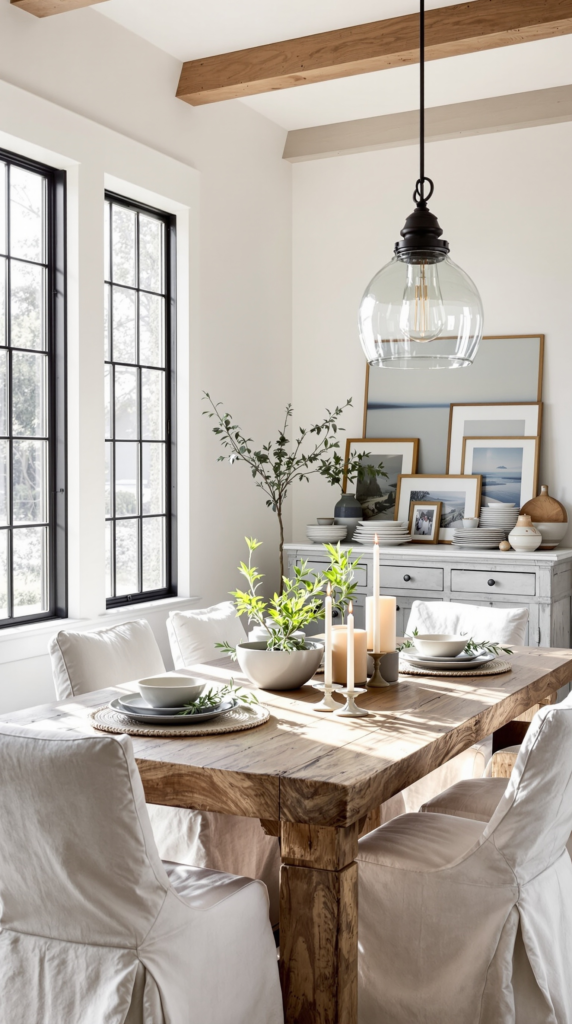
Some of the most captivating homes today blend the best of both aesthetics: farmhouse foundation, cottage heart.
A solid oak dining table paired with white slipcovered chairs. Exposed beams above a soft, floral-upholstered sofa. Black window frames softened by sheer curtains.
This balance feels timeless. The farmhouse provides grounding, the cottage adds grace. It’s rustic redefined — strong yet tender, structured yet soulful.
Also read: How to Get the Modern Farmhouse Look
Designers often call this in-between look “elevated rustic” or “modern country.” But labels aside, what matters is that it feels real. It’s the kind of design that welcomes you in with warmth rather than wowing you with perfection.
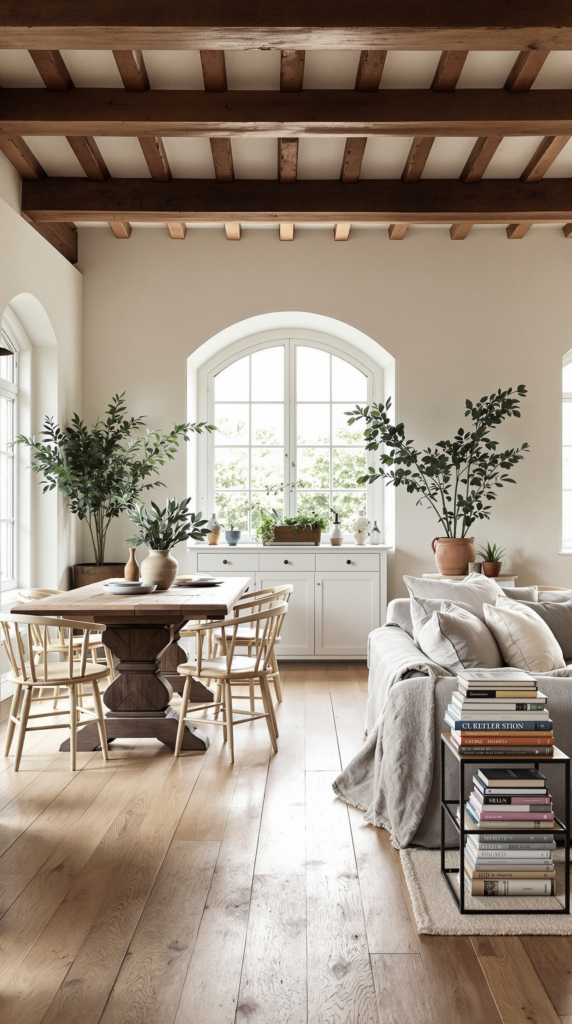
Why Softness Speaks to Us Now
It’s no coincidence that modern cottage interiors have flourished in recent years. In a world that feels increasingly artificial, people are craving authenticity — and softness has become a kind of rebellion.
Cottage spaces remind us of slowness. They ask us to rest, to breathe, to appreciate imperfection.
A chipped vase doesn’t need to be replaced. A wrinkle in the linen can stay. The beauty lies in the life that happens between the polish.
This style resonates not just because it looks good, but because it feels good. It creates emotional safety — something our hypermodern world rarely provides.
And maybe that’s why the shift from farmhouse to modern cottage feels less like a trend and more like a homecoming.
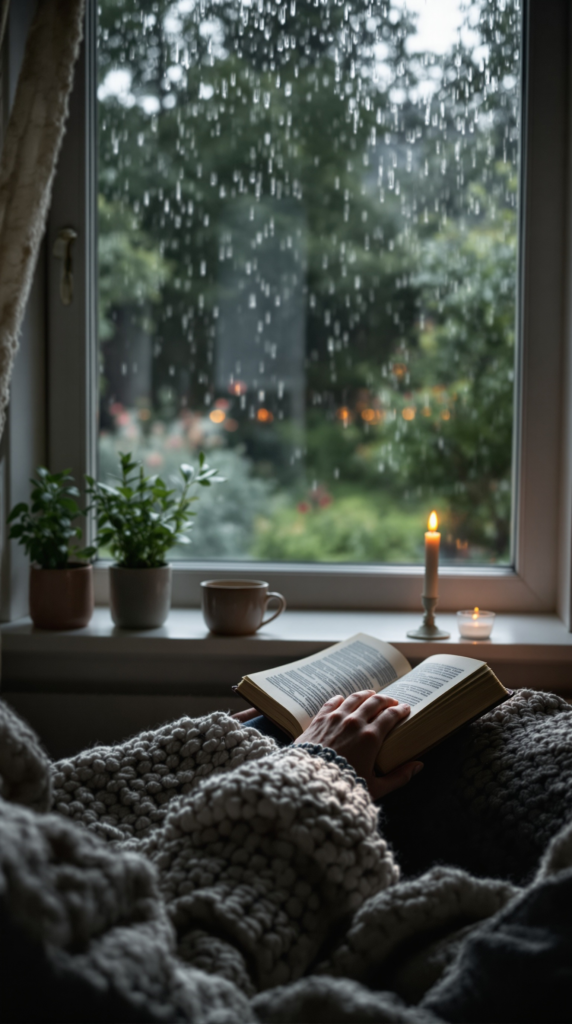
The Comfort of Soft Simplicity
The farmhouse taught us the beauty of work, strength, and honesty. The modern cottage teaches us something different — the beauty of ease, tenderness, and quiet joy.
Together, they form a complete story: a house that stands firm yet feels gentle, that holds its history while welcoming the present.
So when you walk through your home, look for the places that could breathe a little easier.
Let light fall on soft fabrics. Let color speak in whispers.
And remember — design isn’t just about how a home looks. It’s about how it loves you back.