Every autumn, shop windows overflow with bins of “fall décor”—plastic pumpkins, synthetic garlands, glittering accents that feel tired before the first frost. Yet the season itself offers everything you need for beauty and warmth. Sustainable decorating isn’t about deprivation; it’s about seeing your home, your surroundings, and even your habits differently.
This guide walks room by room through ideas that rely on three principles:
- Use what you already have
- Forage responsibly from nature
- Choose vintage or thrifted pieces that live beyond a single season
The result is a home that feels abundant and layered, yet leaves nothing to discard when winter arrives.
Begin at Home: Rediscover Your Own Treasures
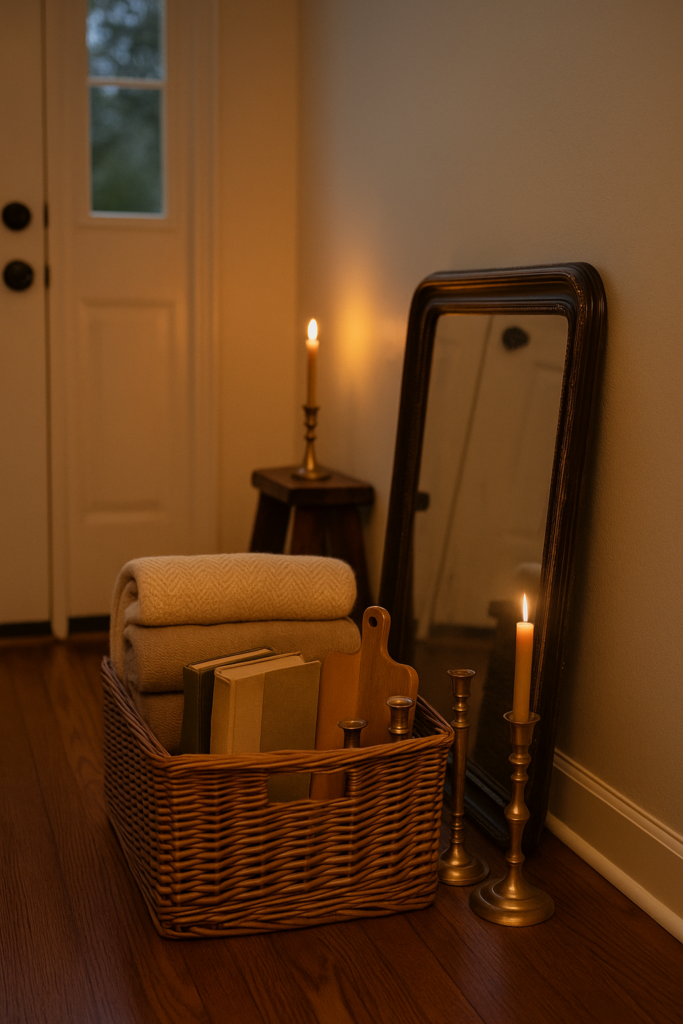
Before you spend a cent, take a slow walk through your rooms with a basket. Gather forgotten throws, extra pillows, pottery you rarely use, stacks of books, wooden boards, even an old mirror tucked in a closet. Group these finds by color and texture. You’ll see patterns emerge—warm neutrals, soft knits, glints of brass—that can be restyled into new vignettes.
Swapping objects between rooms often creates a bigger transformation than buying anything new. That cutting board from the kitchen might become a rustic tray for candles; a bedroom chair moved to the living room can create an inviting reading corner.
Forage the Season
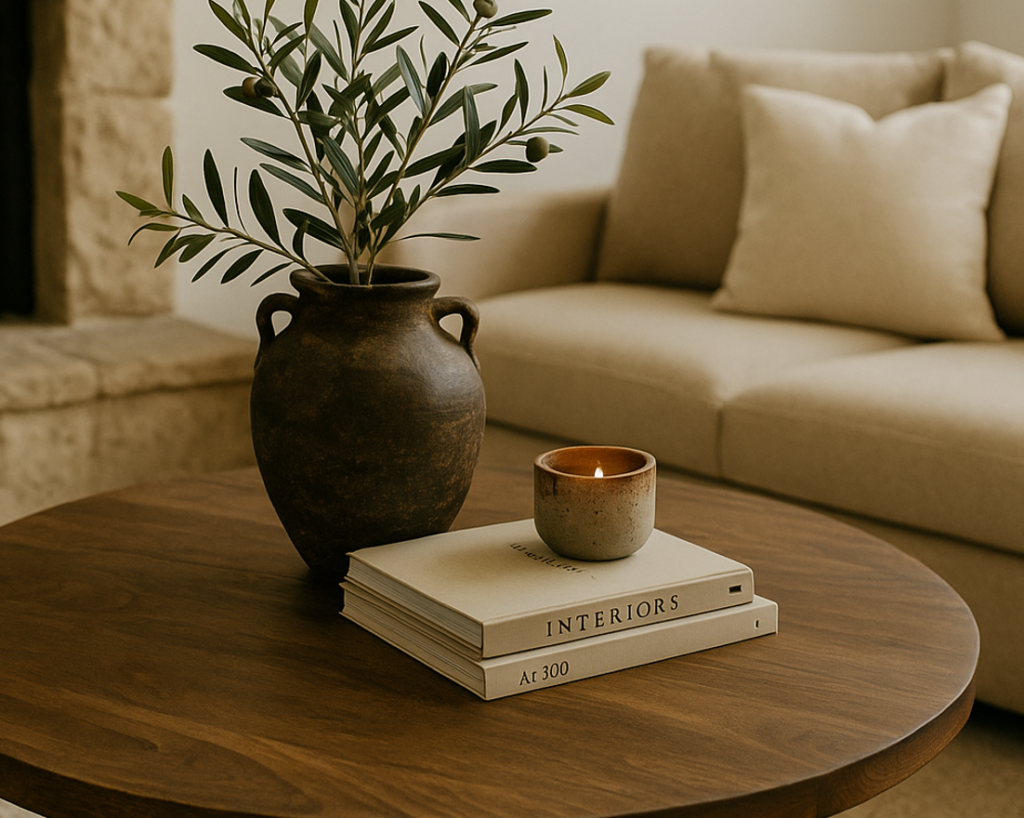
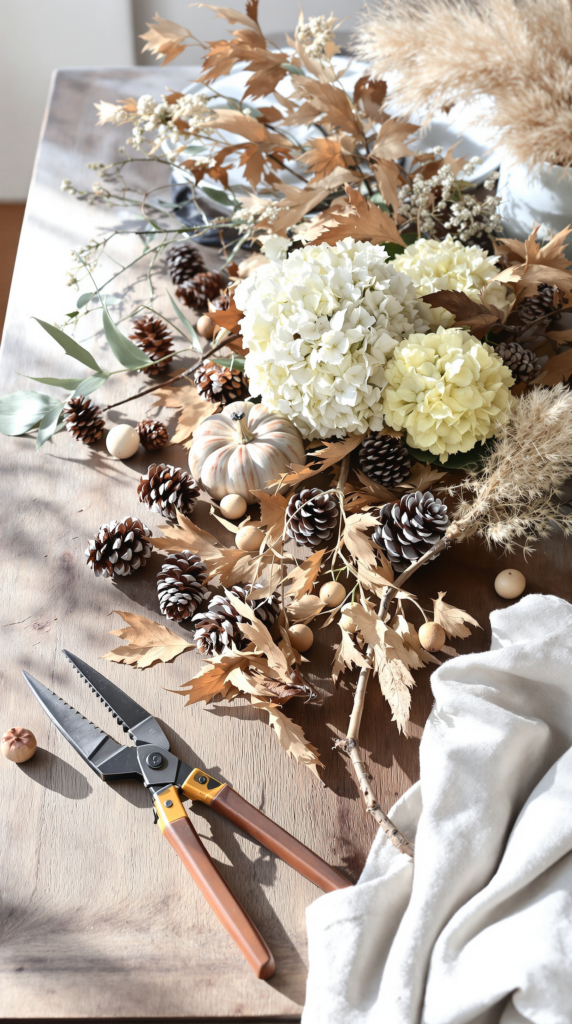
Autumn itself is a decorator. A single walk can yield branches of oak or maple, seed pods, pinecones, late hydrangea heads, or tufts of ornamental grass. Choose only fallen or freely offered clippings, and avoid protected areas. At home, let the foliage dry naturally; most branches keep their shape for weeks, then compost back into the soil.
A tall branch in a heavy vase can rival any store-bought arrangement. Pinecones gathered underfoot become the perfect filler for bowls or lanterns. Nature provides not just decoration but an ongoing connection to the season outside your windows.
The Quiet Luxury of Thrift
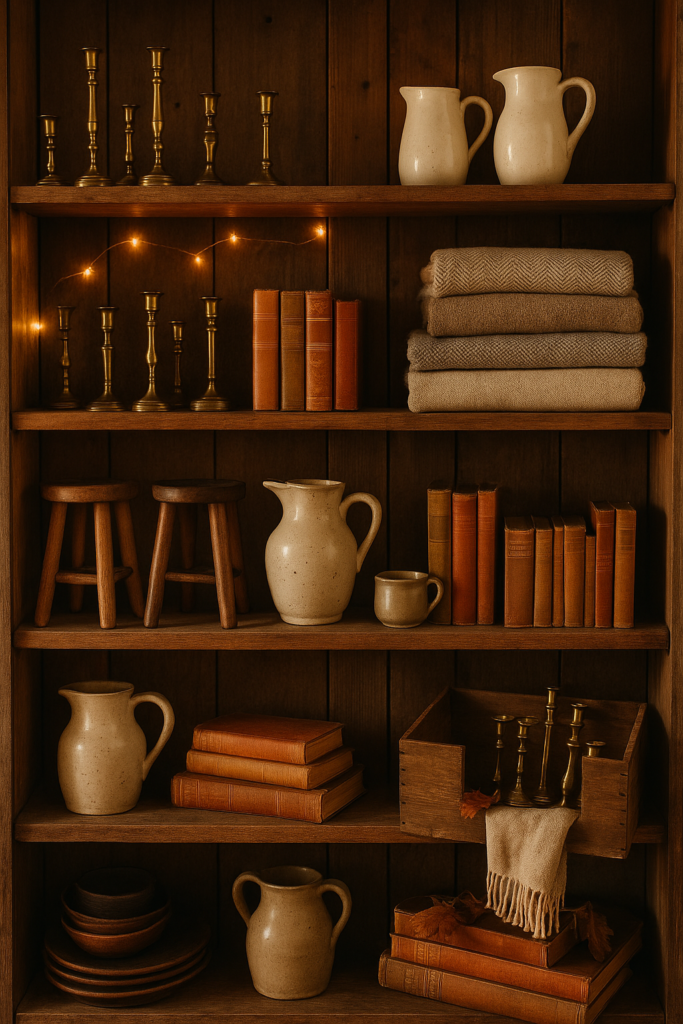
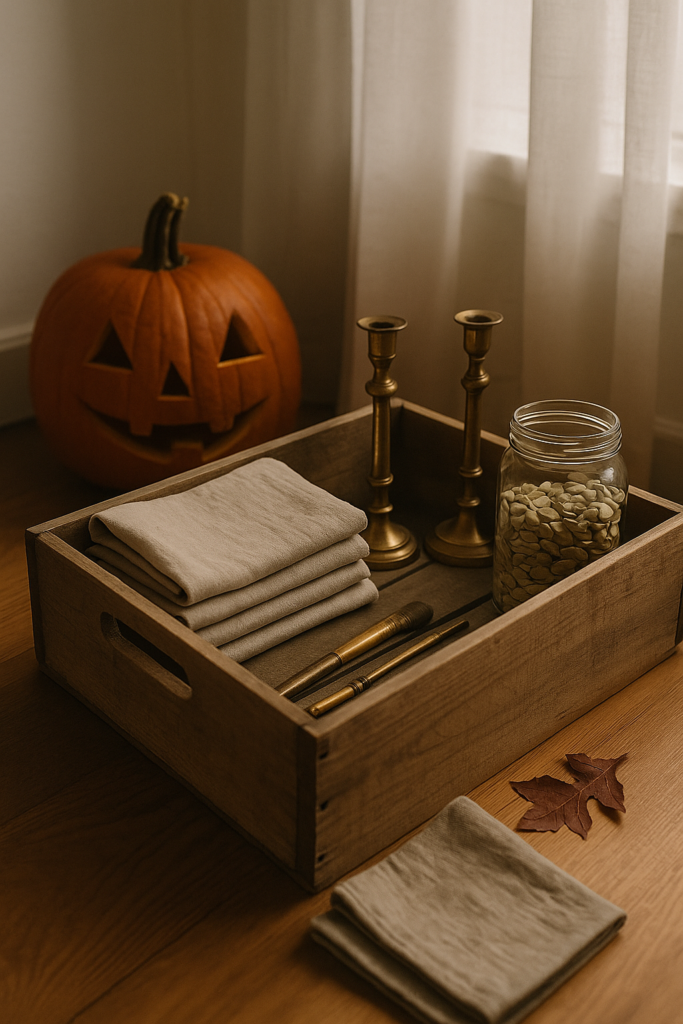
If you crave something “new,” let it be something old. Vintage and secondhand pieces carry history and use no fresh resources. Hunt for solid wood furniture, wool or linen textiles, heavy ceramic bowls, real brass candlesticks, or rattan trays. These materials age gracefully and adapt to any style.
A thrifted mirror with a tarnished frame reflects candlelight beautifully. A stack of old books with faded spines becomes a warm-toned pedestal for a branch arrangement. These finds cost little, last for decades, and tell a richer story than mass-produced decor.
Build an Fall Palette from What You Find
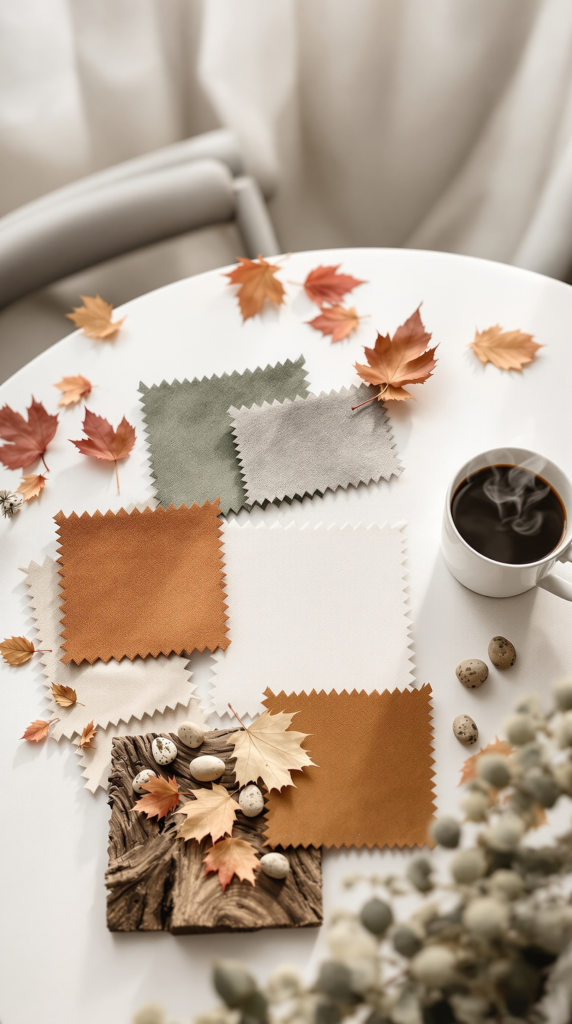
Instead of chasing trend colors, let your materials decide: the russet of fallen leaves, the deep green of moss, the soft gray of weathered wood, the muted burgundy of dried hydrangea. Repeat two or three of these tones throughout the house to create flow.
Also read: Moody & Modern: Dark Palette Fall Decor
Textures matter as much as color: linen napkins, wool throws, unglazed ceramics, reclaimed wood. When the same textures echo from room to room, your home feels designed—without a single “set” of store-bought decorations.
Living Room: Layers of Warmth
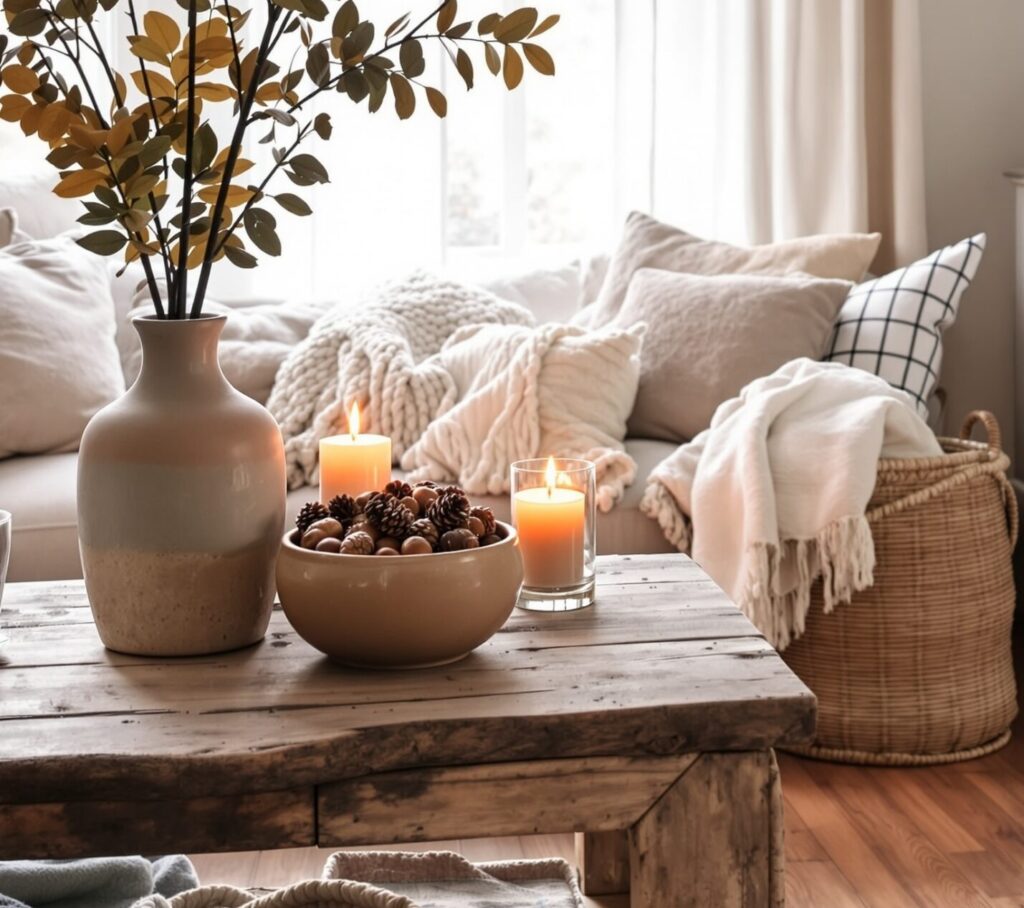
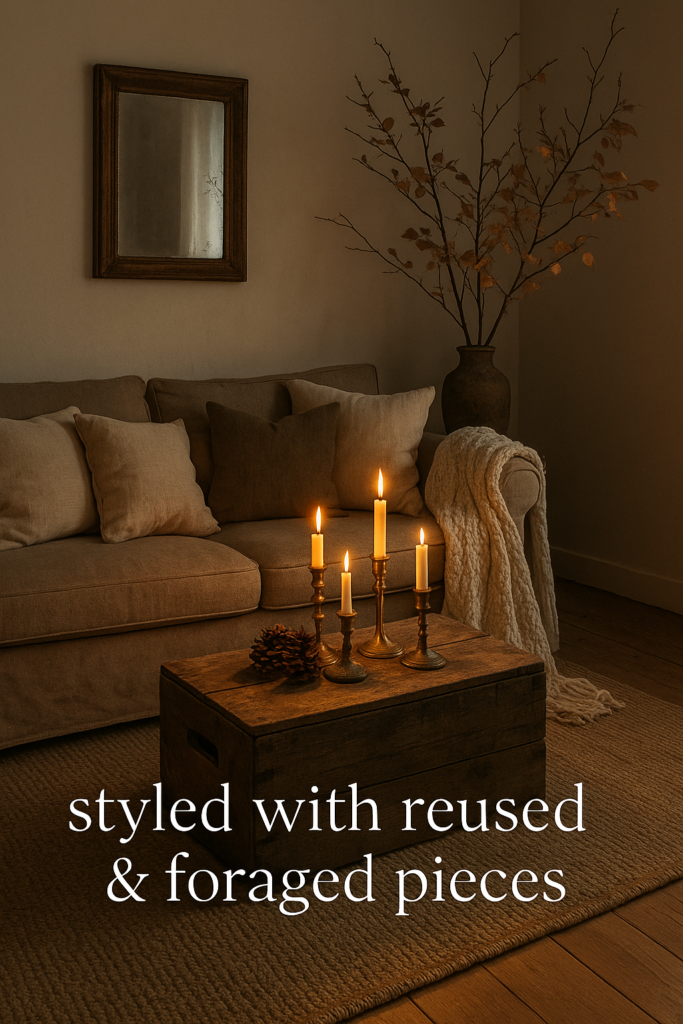
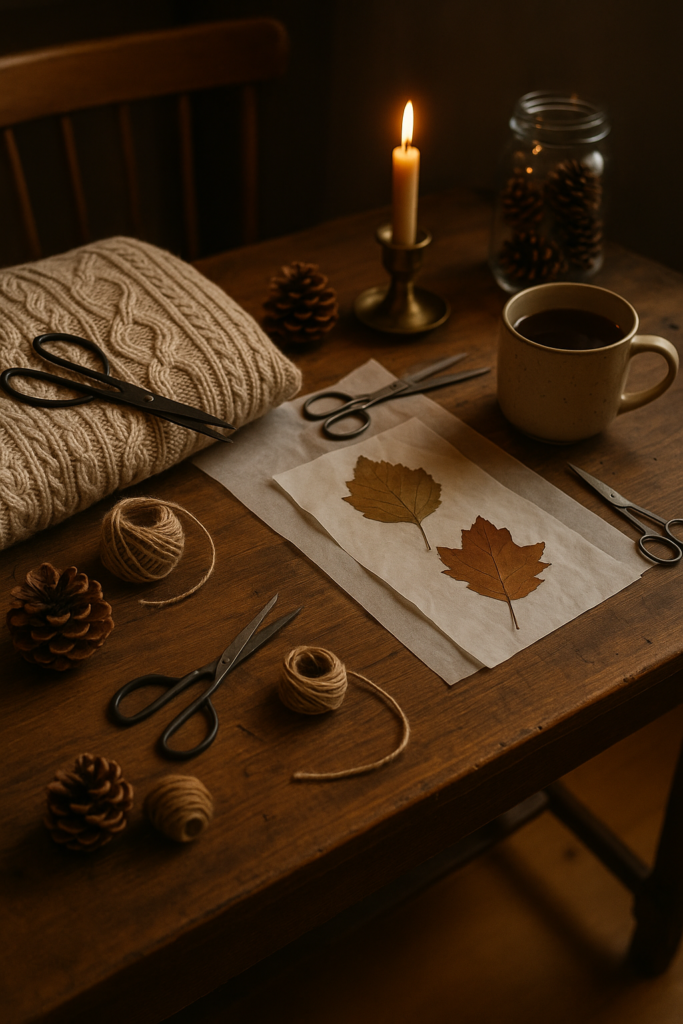
Gather every neutral pillow and blanket to build a seasonal nest. Place a low wooden crate or old tray on the coffee table, fill it with pinecones and a few taper candles in mismatched holders. Frame pressed leaves between sheets of glass for art that costs nothing.
This is also the perfect place for a large foraged branch. Its silhouette against lamplight is more dramatic than any artificial centerpiece.
Dining Room: A Table That Returns to the Earth
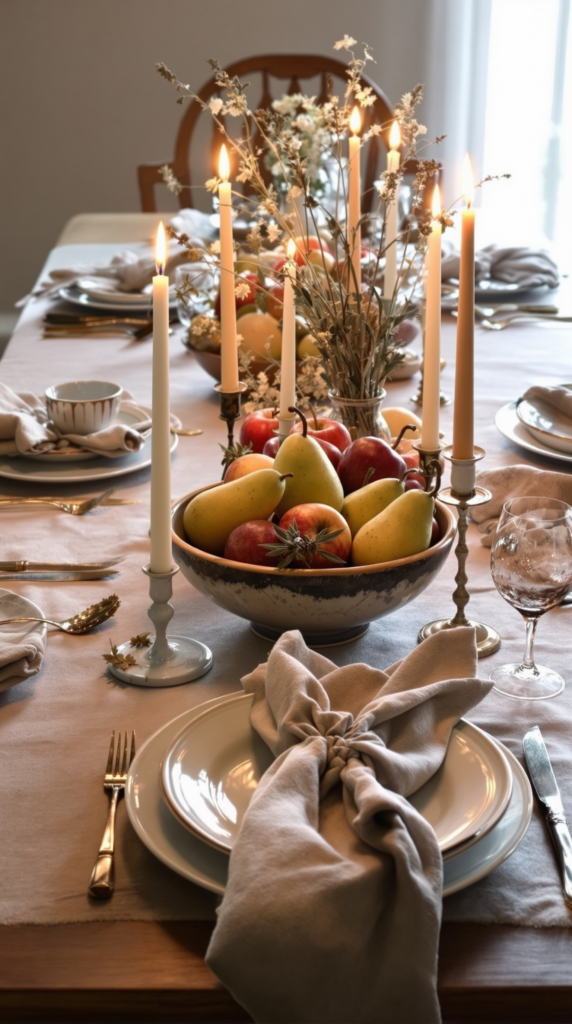
Create a centerpiece that can be eaten or composted. Pile a thrifted ceramic bowl with pears, apples, or small gourds. Add sprigs of dried herbs for fragrance. Use cloth napkins—old linen tea towels work beautifully—and mismatched vintage plates and flatware.
When dinner is done, the fruit becomes dessert, the herbs flavor tomorrow’s soup, and nothing heads to a landfill.
Kitchen: Functional Beauty
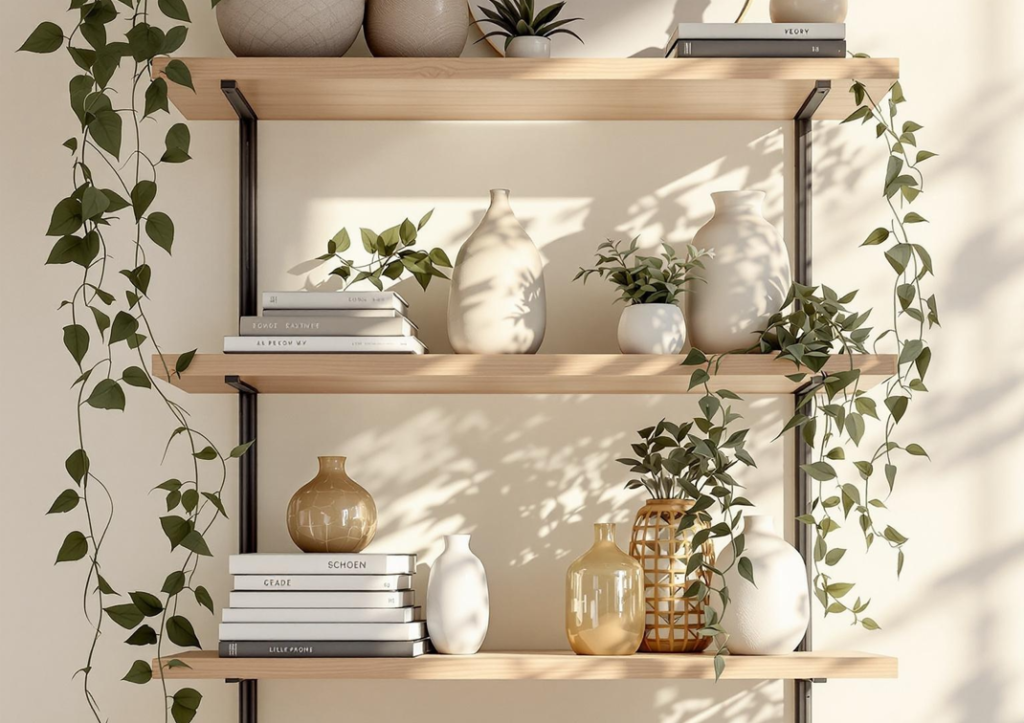
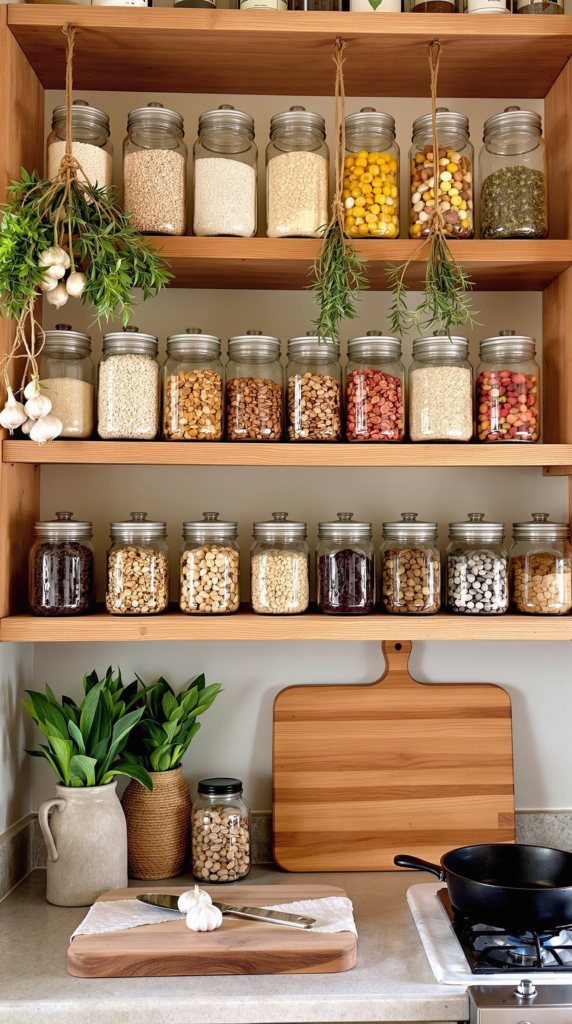
Turn everyday staples into display. Glass jars of grains, beans, or dried fruit add texture and color to open shelves.
Hang foraged herbs or garlic to dry; they scent the room now and feed you later. A well-worn cutting board can double as a rustic serving tray for bread or seasonal fruit.
Entryway: First Impressions with a Light Footprint
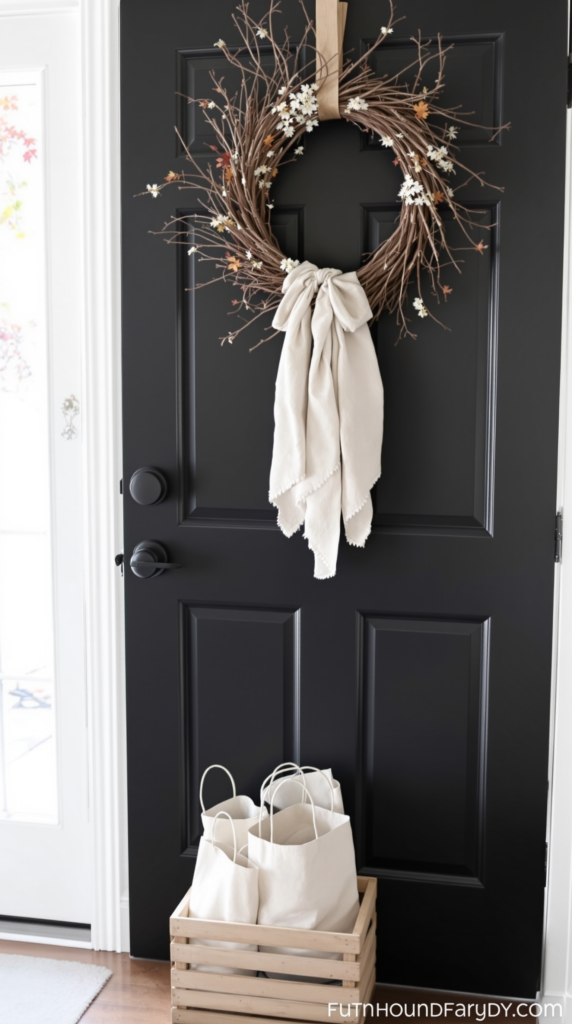
Welcome guests with a wreath of vines or twigs tied with scrap ribbon. Set a thrifted basket by the door for reusable shopping bags and scarves. An old wooden crate or stool can corral shoes and boots, reducing the need for extra cleaning products inside.
Porch and Garden
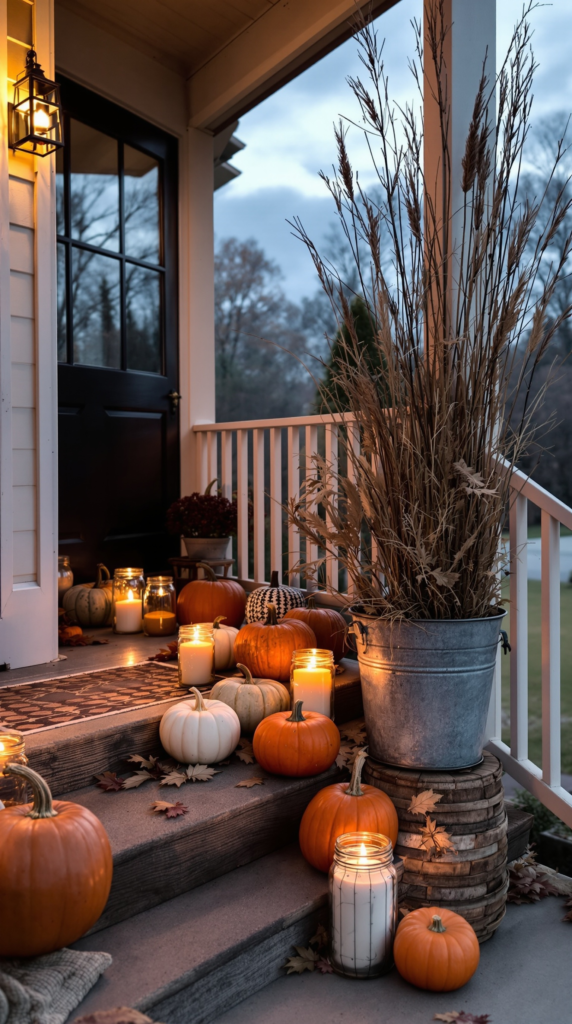
Line steps with real pumpkins or gourds—bake or compost them when the season ends. Cluster lanterns or simple glass jars with tea lights you already own.
A tall bundle of grasses or bare branches in a galvanized bucket makes a dramatic, biodegradable statement.
Quick Upcycles
- Sweater → Pillow Cover: Slide a cushion into a retired sweater and knot the sleeves behind for a chunky knit accent.
- Jar Lanterns: Wrap wire around jar rims to hang from tree branches or porch hooks.
- Pressed Leaf Windows: Iron leaves between parchment and tape to a sunny pane for natural stained glass.
Each project costs almost nothing and returns to regular use or compost when you’re finished.
Packing Away—or Letting Go
When winter arrives, eat the fruit, burn or compost the branches, and fold your textiles back into everyday life. Store candles and reusable jars in a single labeled box for next year. Your autumn decor leaves no plastic bins to dread in the attic and no guilt for next season.
A Different Kind of Abundance
True seasonal luxury isn’t a haul from the craft store; it’s a home that feels alive with the textures and scents of the world outside.
By reimagining what you already own, gathering what nature offers, and bringing home only the vintage pieces that can serve for decades, you create a space that is warm, layered, and profoundly sustainable—proof that less buying can mean more beauty.