Japandi design blends Japanese minimalism with Scandinavian warmth, creating spaces that feel calm, functional, and deeply intentional. In a home office, this balance is especially valuable: Japandi interiors reduce visual noise, emphasize natural materials, and support focus without feeling cold or sterile.
Rather than treating Japandi as a checklist of elements, the ideas below can be used independently. Each one represents a different design direction you can apply depending on your space, needs, and working style.
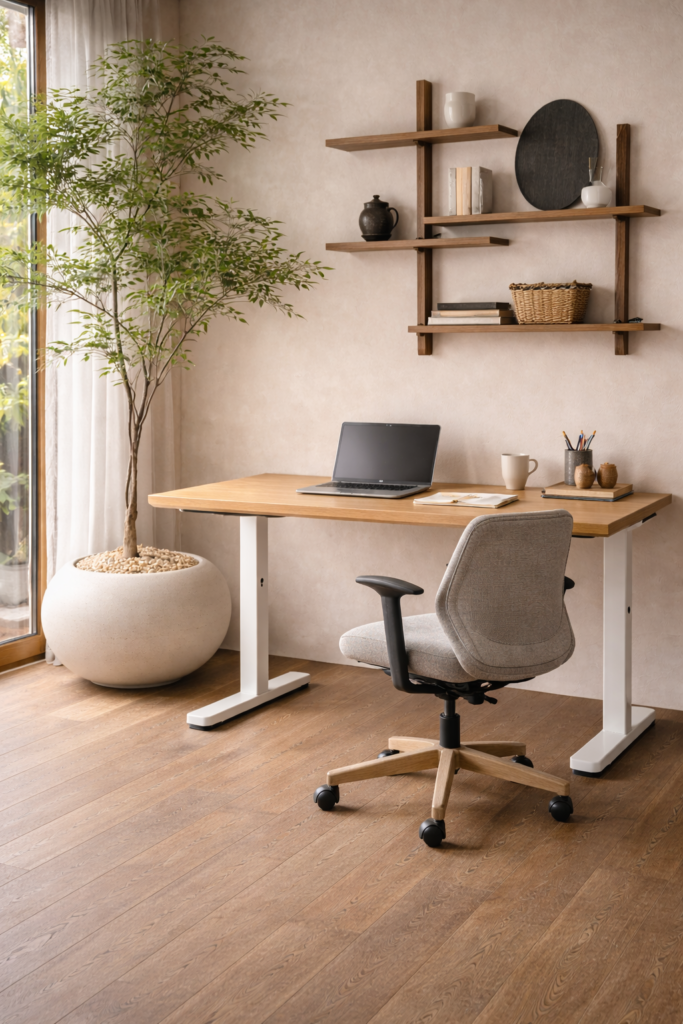
1. The Solid Wood Desk as the Defining Element
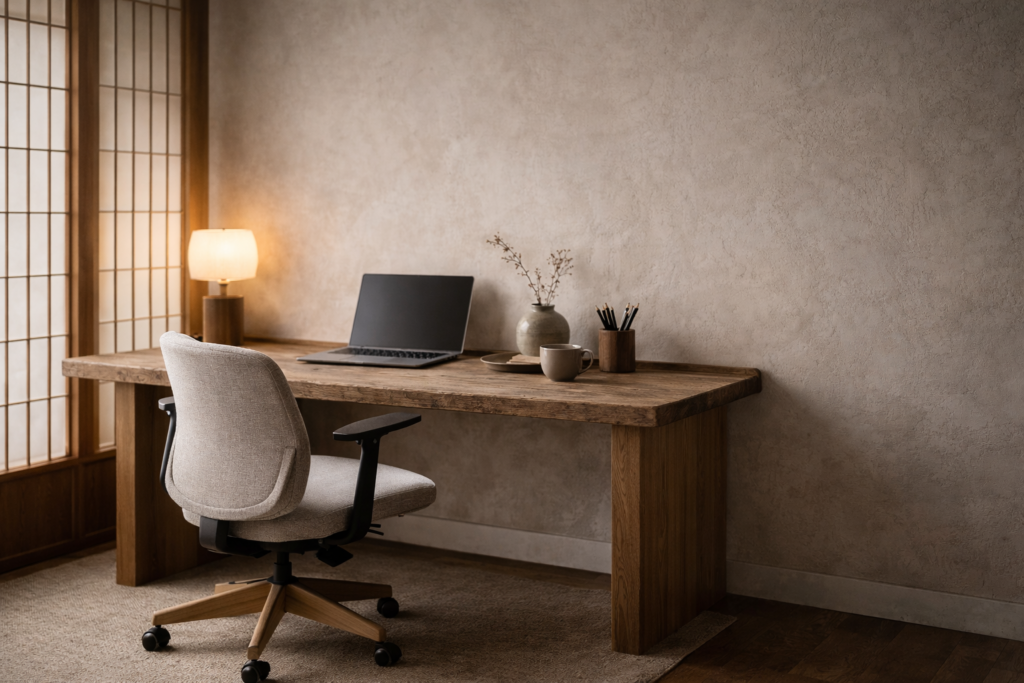
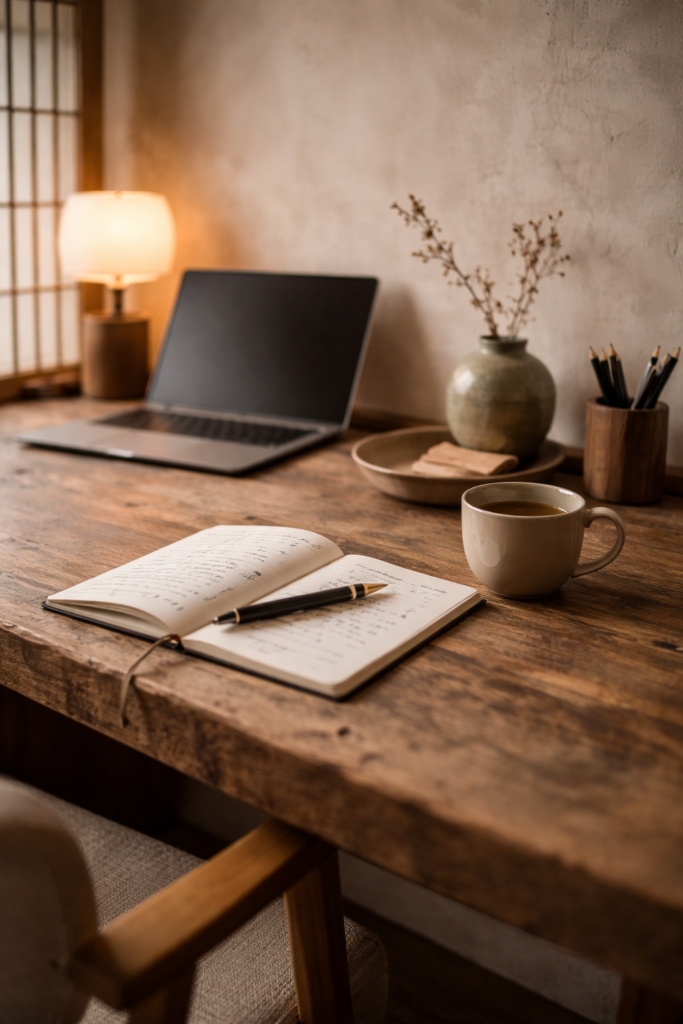
A Japandi home office can be built entirely around a single, well-crafted desk. Solid wood desks with visible grain — oak, ash, walnut, or birch — bring warmth and grounding to the space. The desk becomes both a functional tool and a visual anchor, eliminating the need for extra decoration.
This approach works especially well in minimalist rooms where the architecture and materials do most of the work.
2. A Soft, Muted Color Palette for Visual Calm
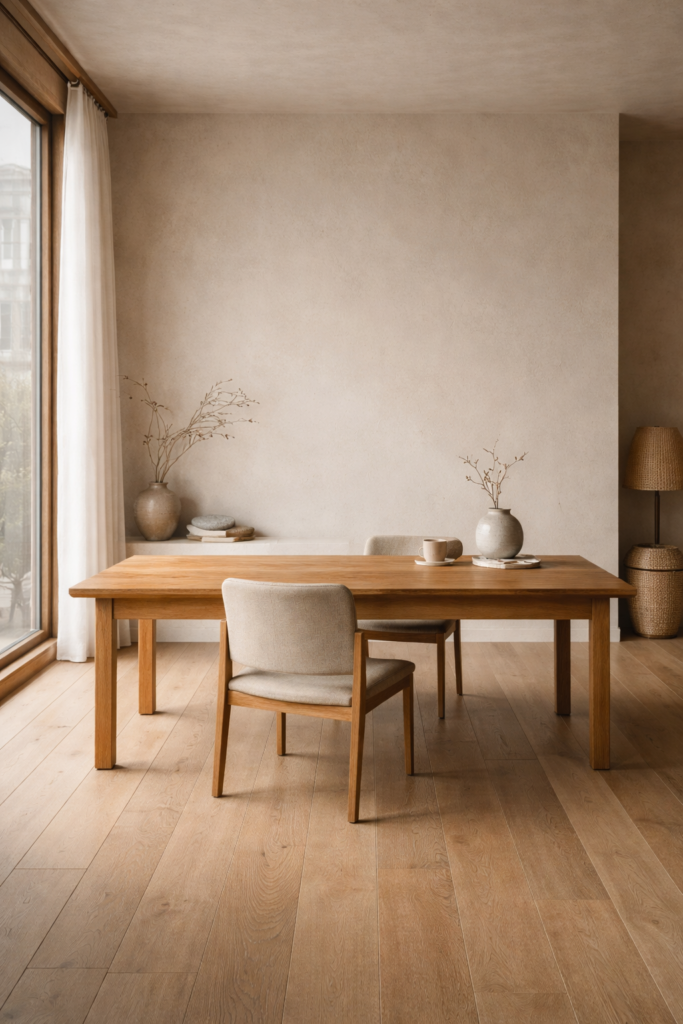
Instead of stark white or high contrast, Japandi offices rely on muted neutrals such as warm beige, stone, greige, or soft clay tones. These colors absorb light gently and reduce eye fatigue, making them ideal for long workdays.
This idea can stand alone in any room by simply rethinking wall color and textiles, without changing furniture at all.
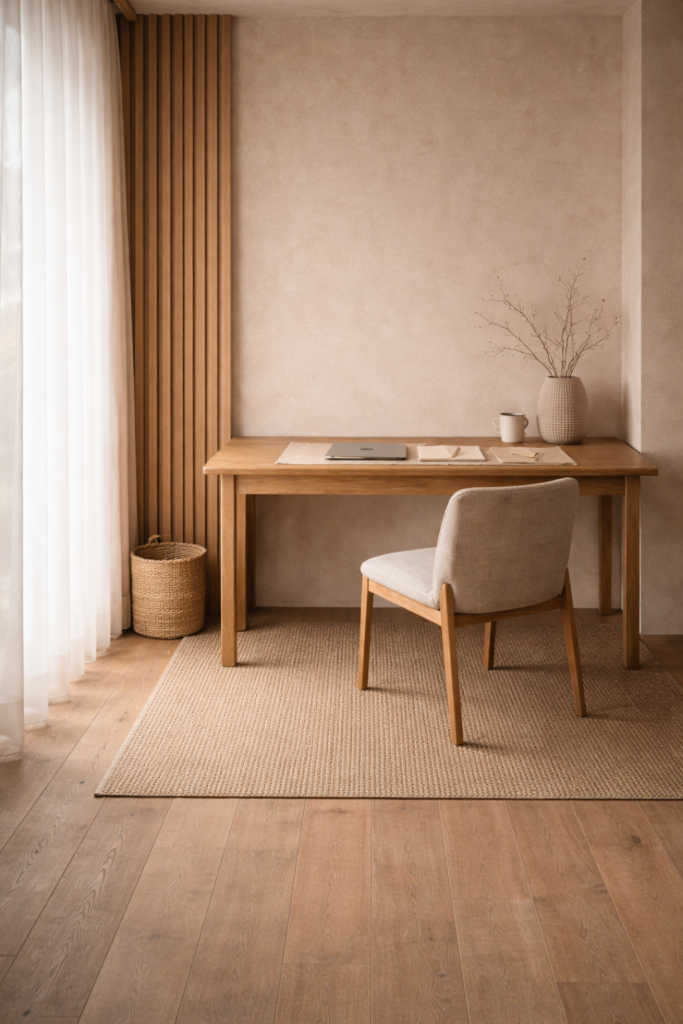
3. Natural Materials as the Main Design Feature
Japandi design often replaces decoration with texture. Linen, cotton, wool, wood, bamboo, stone, and ceramics provide subtle depth without visual clutter.
A home office designed around natural materials may feel almost empty at first glance — but the richness comes from touch, grain, and imperfection rather than objects.
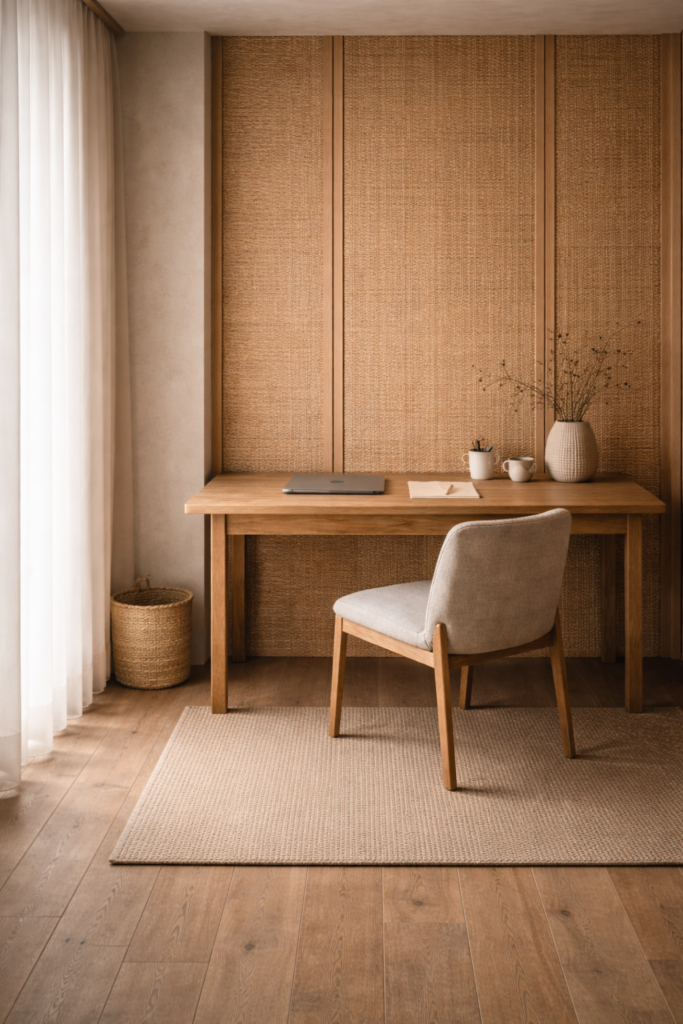
4. Gentle, Diffused Lighting Instead of Harsh Task Lighting
Lighting is a defining element in Japandi interiors. Instead of relying on strong overhead lights, opt for diffused sources such as paper lamps, fabric shades, or indirect lighting.
This idea works particularly well for people who work early mornings or evenings, when softer lighting supports focus without overstimulation.
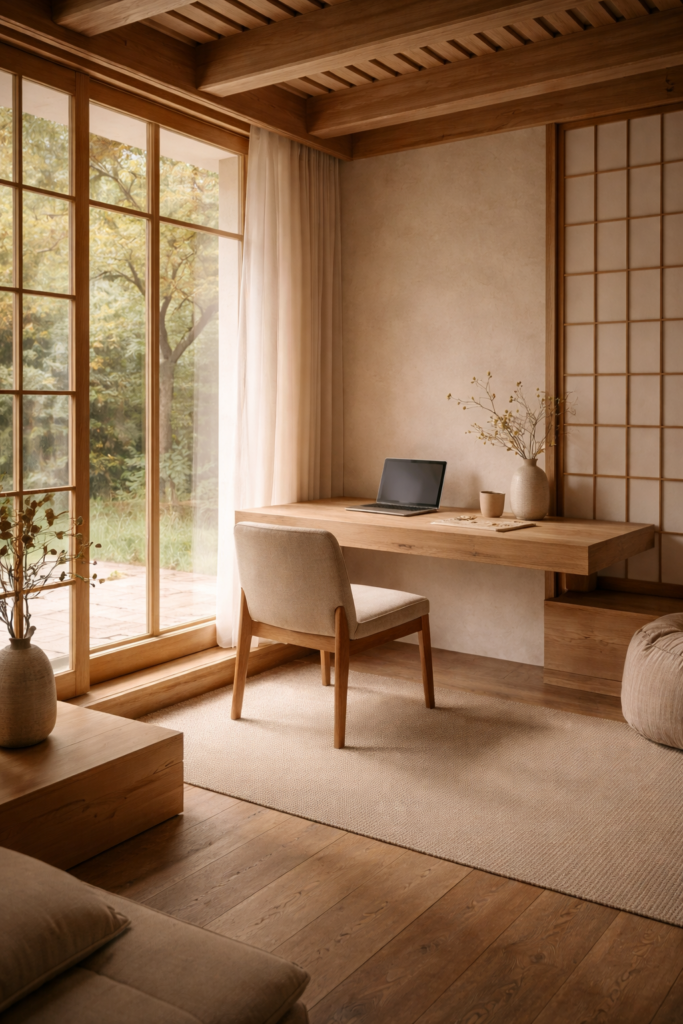
5. Floating Shelves with Intentional Negative Space
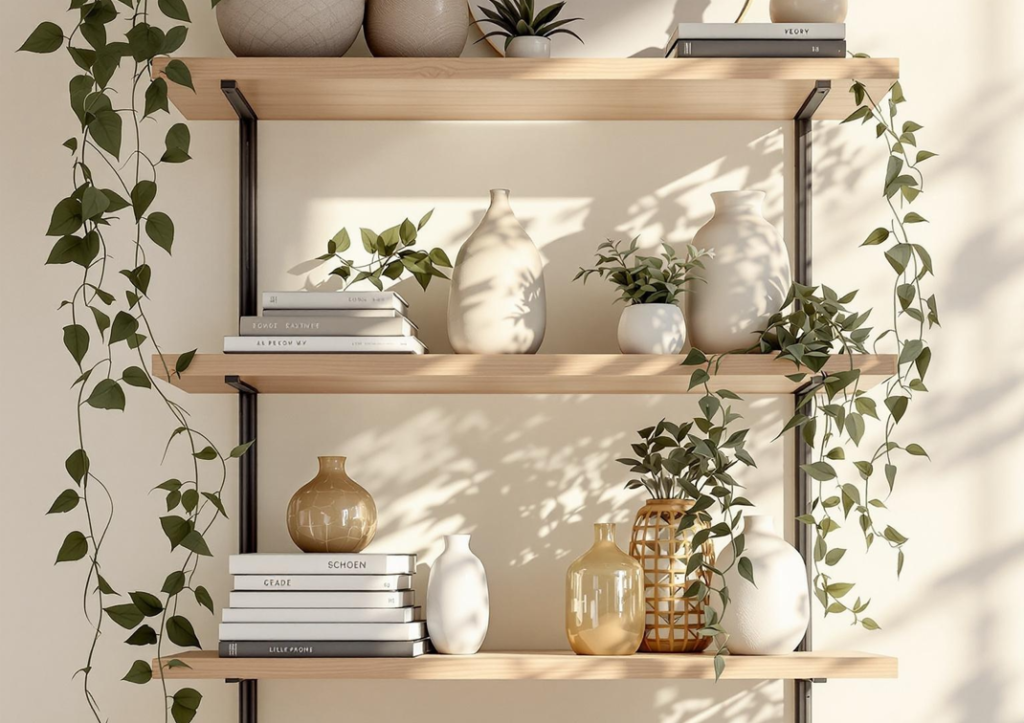
Rather than storage-heavy solutions, Japandi home offices often use floating shelves sparingly. The key is spacing: shelves are not filled, but curated.
This approach works well for small spaces, where visual lightness matters more than storage volume.
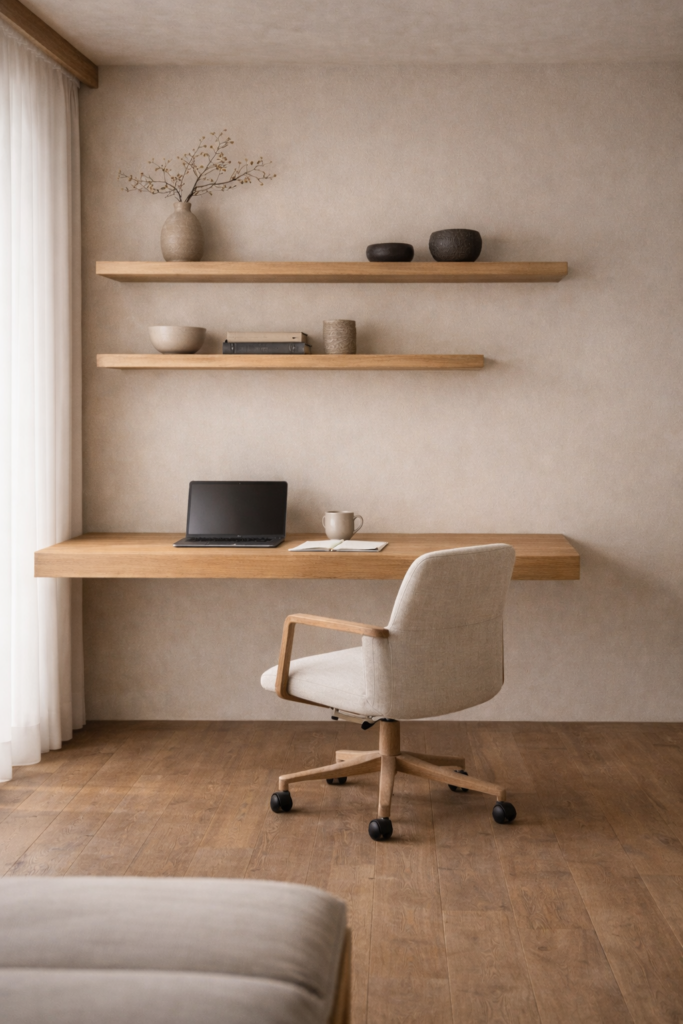
6. A Single Plant or Natural Element as a Focal Point
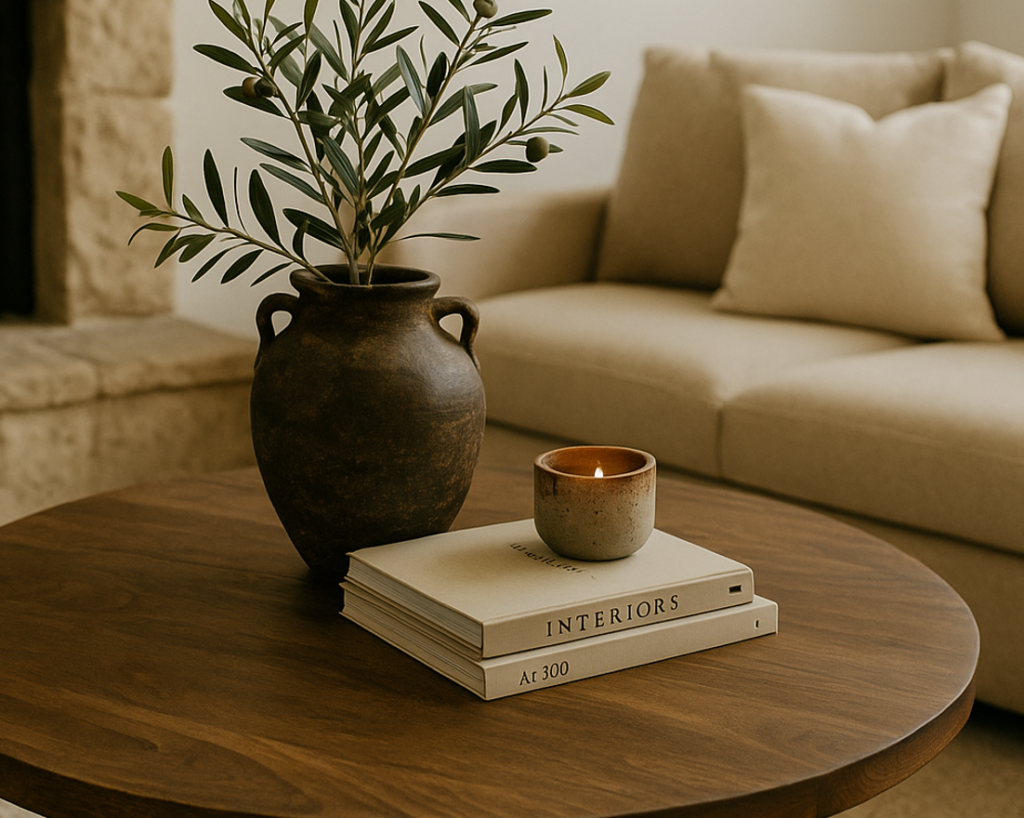
Biophilic design plays an important role in Japandi interiors. Instead of multiple plants, one well-chosen element — a bonsai, olive tree, or sculptural branch — can define the space.
This idea suits offices where minimalism is essential, but a connection to nature is still desired.
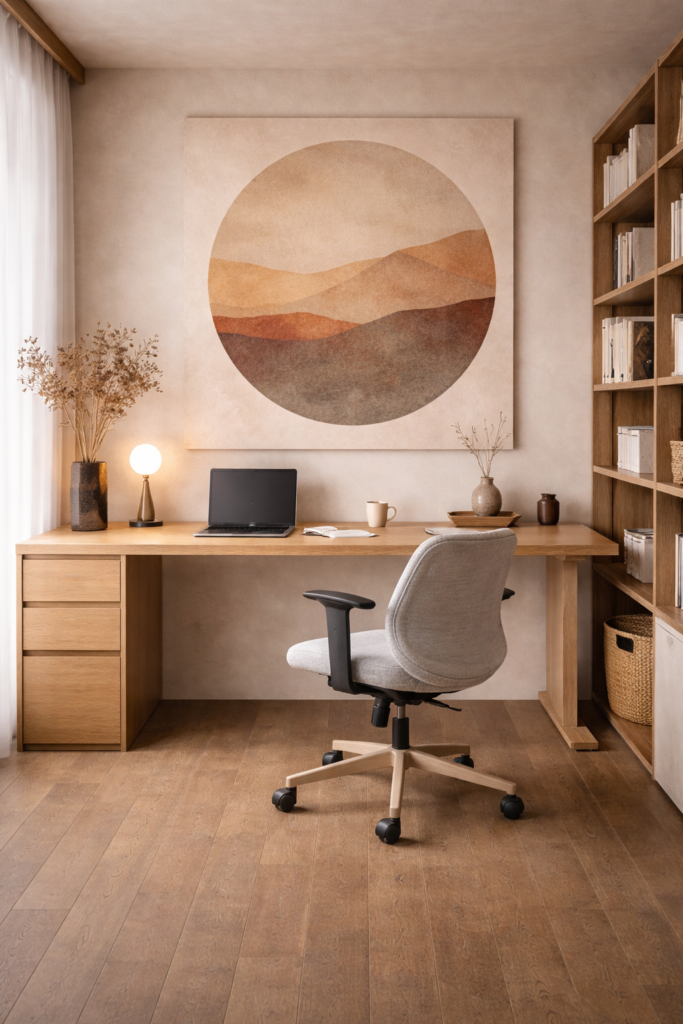
7. One Quiet Artwork Instead of a Gallery Wall
Japandi design favors restraint. A single piece of art — abstract, nature-inspired, or calligraphic — can bring personality without distraction.
This works especially well for people who find visual clutter mentally exhausting but still want character in their workspace.
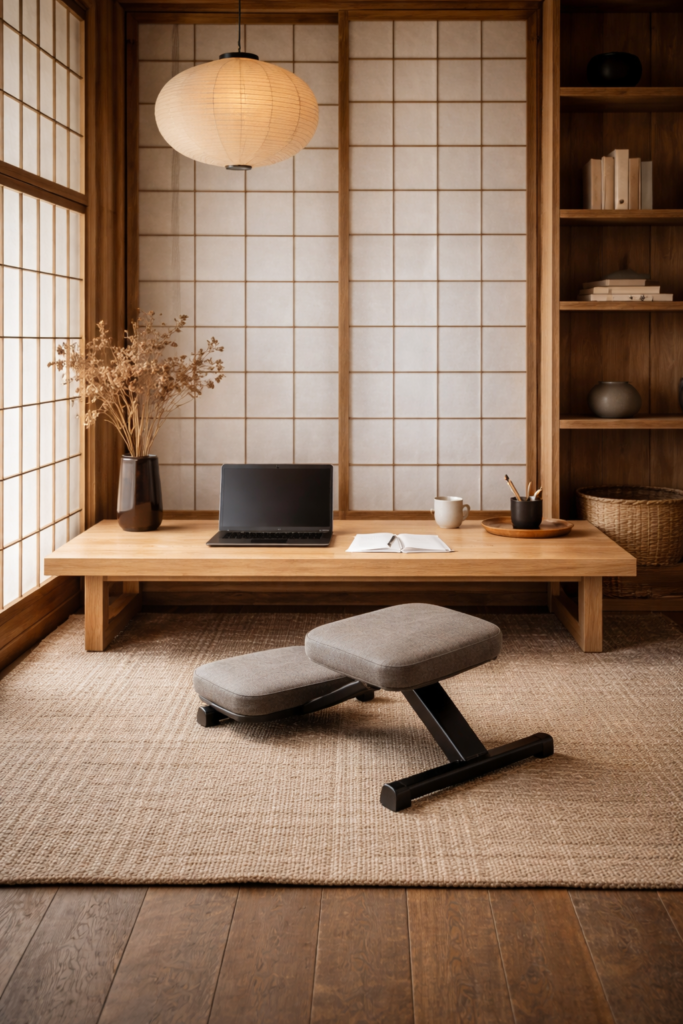
8. Low-Profile Seating That Feels Grounded
Rather than bulky office chairs, Japandi offices often use seating with simple silhouettes: light wood frames, woven details, or upholstered chairs in neutral fabrics.
This idea emphasizes balance — comfort without dominance — and works well in multipurpose rooms where the office should visually recede when not in use.
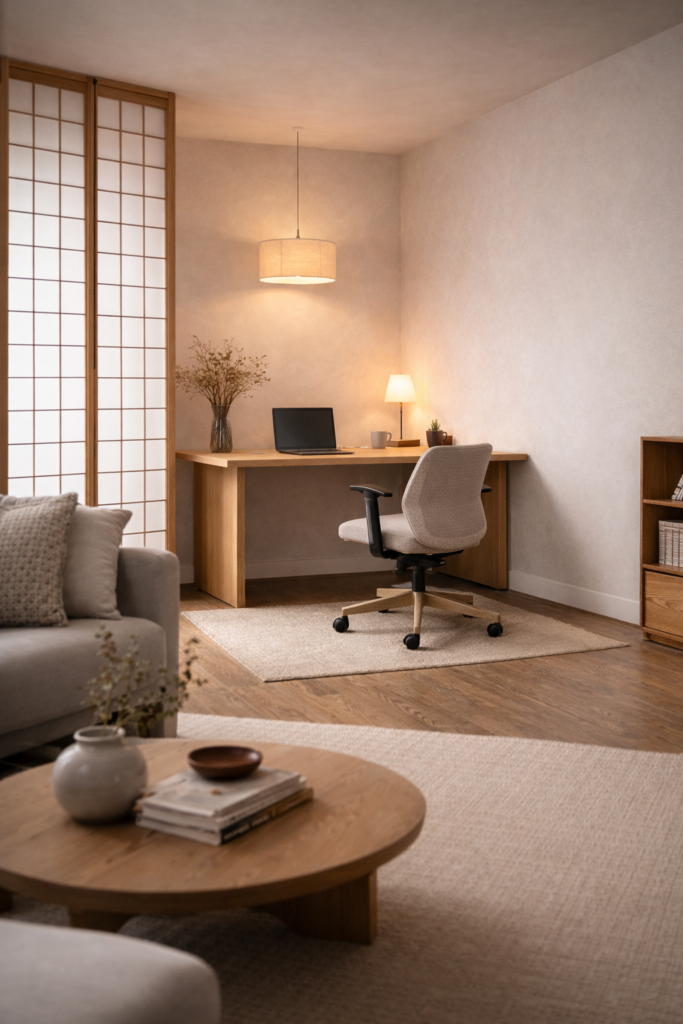
9. A Defined Office Nook Within a Larger Space
Japandi home offices don’t always require a separate room. A calm workspace can be created within a living area using subtle zoning: a rug, lighting shift, or desk orientation.
This idea is ideal for apartments or shared spaces, where separation is psychological rather than physical.
10. Wabi-Sabi Details and Visible Imperfection
At the heart of Japandi design is wabi-sabi — the appreciation of imperfection and impermanence. Hand-thrown ceramics, slightly irregular wood grain, or gently worn materials add warmth and authenticity.
This idea works independently as a mindset: choosing fewer, more meaningful objects instead of perfect, mass-produced ones.
Final Thoughts
A Japandi home office is not about trends or aesthetics alone. It’s about designing a workspace that supports clarity, calm, and intention.
Whether you apply one of these ideas or combine several, the goal remains the same: a space that feels grounded, functional, and quietly beautiful.
Want more? Japandi Interiors: Warm Minimalism and Thoughtful Modern Living