When you strip a living room down to the essentials, you’re left with a single question: what is this space supposed to feel like? Designers have all sorts of answers—calm, collected, expressive, dramatic—but rooms grounded in earthy inspiration almost always feel honest.
They feel lived-in without being cluttered, warm without being heavy, and curated without being contrived. Earth-driven interiors draw from the colors, textures, and shapes we instinctively trust: clay, wood, stone, forest greens, handmade objects, soft organic silhouettes. And when done well, they create a space that feels quietly anchored yet visually alive.
Below are 11 complete design concepts, each one fully distinct and layered enough to stand alone as a mood, a palette, and a way of living. They share an earth-inspired foundation, but the execution and atmosphere are entirely different—from terracotta-warm rooms to Mediterranean softness to woodland coziness.
1. Clay & Terracotta Palette
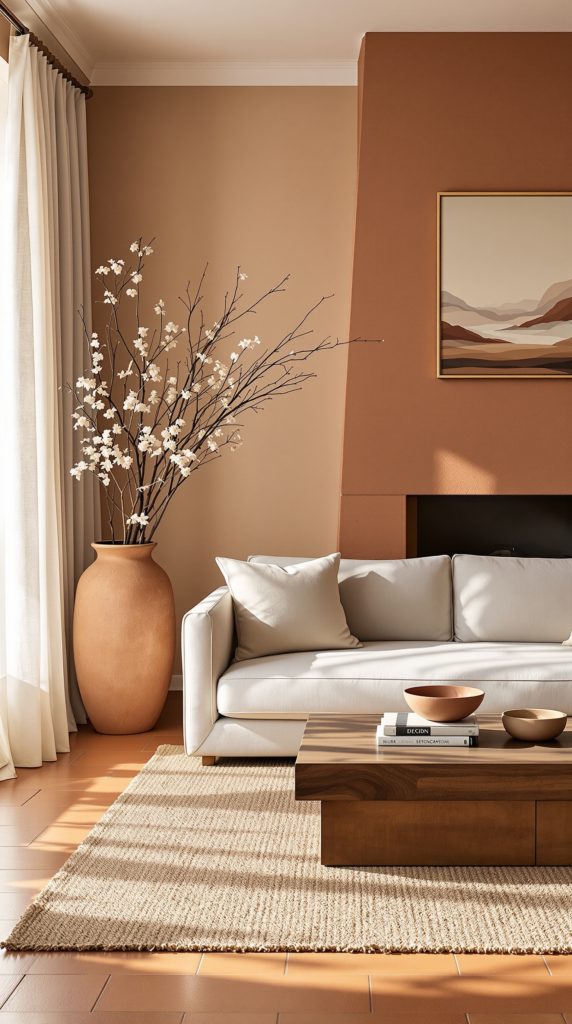
Clay isn’t simply a color—it’s a spectrum of mineral undertones that shift with light: paprika, sienna, muted rose, clay red, baked earth, bone. A terracotta-driven living room works best when the walls aren’t flat; think limewash or plaster that holds subtle tonal variations.
Add in raw terracotta ceramics, burnt-orange upholstery, warm walnut, and soft cream textiles to keep the palette grounded rather than overpowering.
The result is a space that feels sun-warmed, tactile, and quietly confident—like the walls themselves are holding onto a bit of heat.
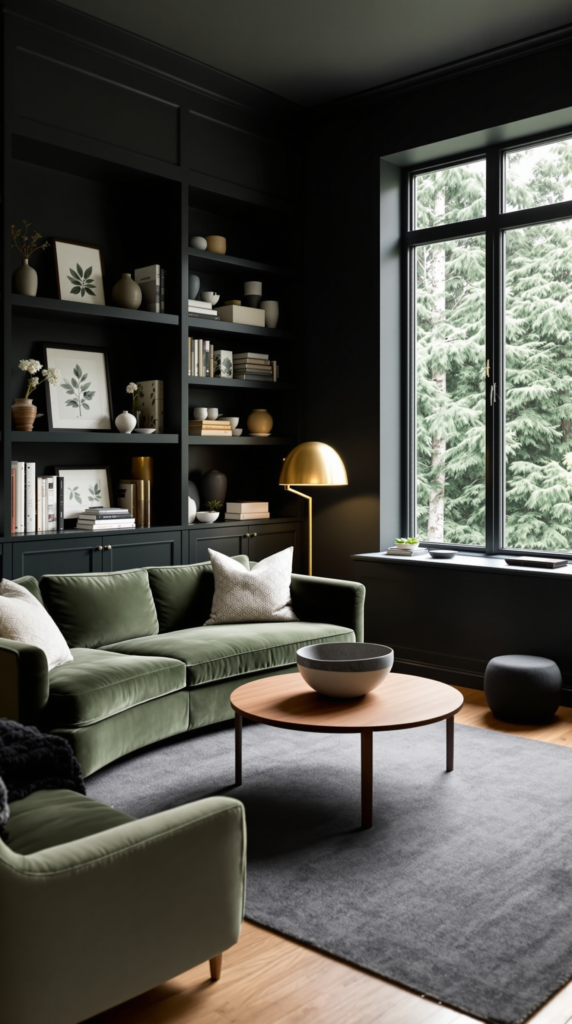
2. Forest-Inspired Greens
Forest palettes work because they mimic what the human eye already finds restful: layers of shadow, deep greens, shifting tones, and natural wood grains. In a living room, this concept isn’t about bright “decorator green” accents. It’s about canopy shades—black-green, moss, spruce—paired with warm woods and soft fabrics that absorb light rather than bounce it back.
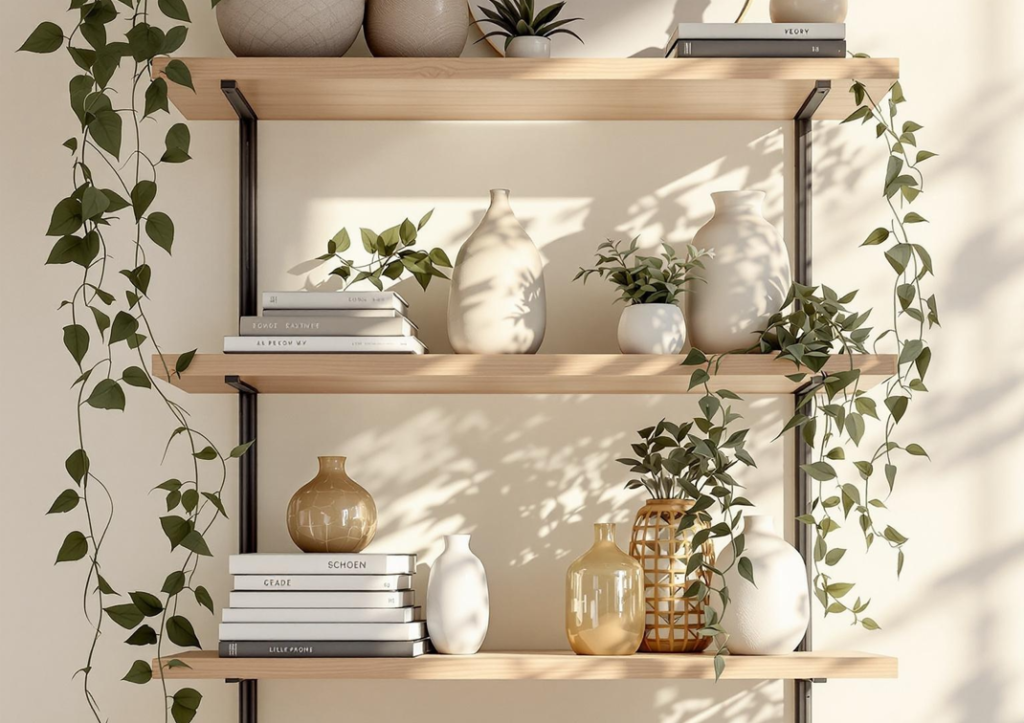
Plants help, but so does artwork inspired by old botanical prints, woven textures, and cozy, shadowy lighting. The room takes on a cocoon-like feeling, grounded and introspective.
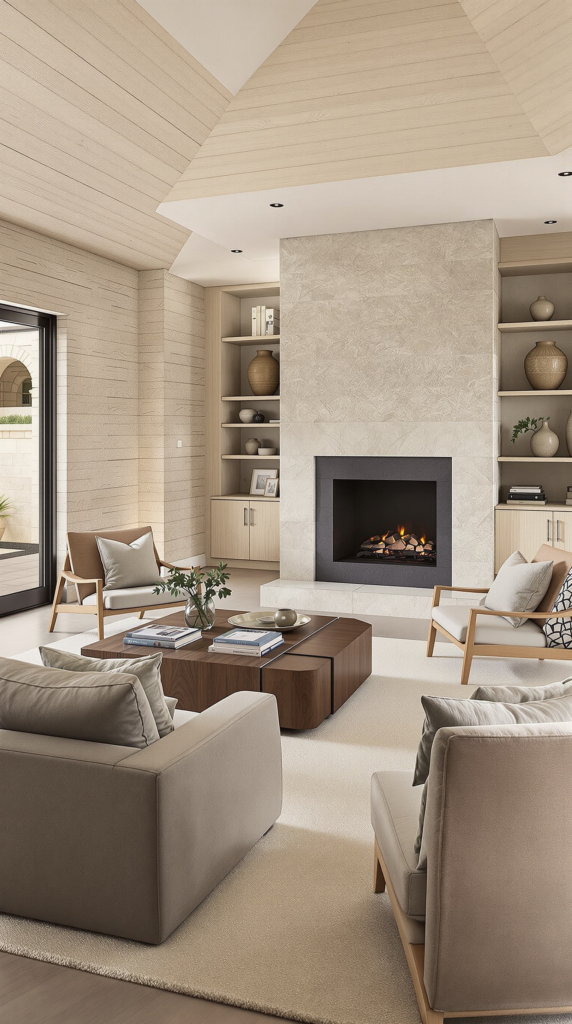
3. Stone-Focused Living Rooms
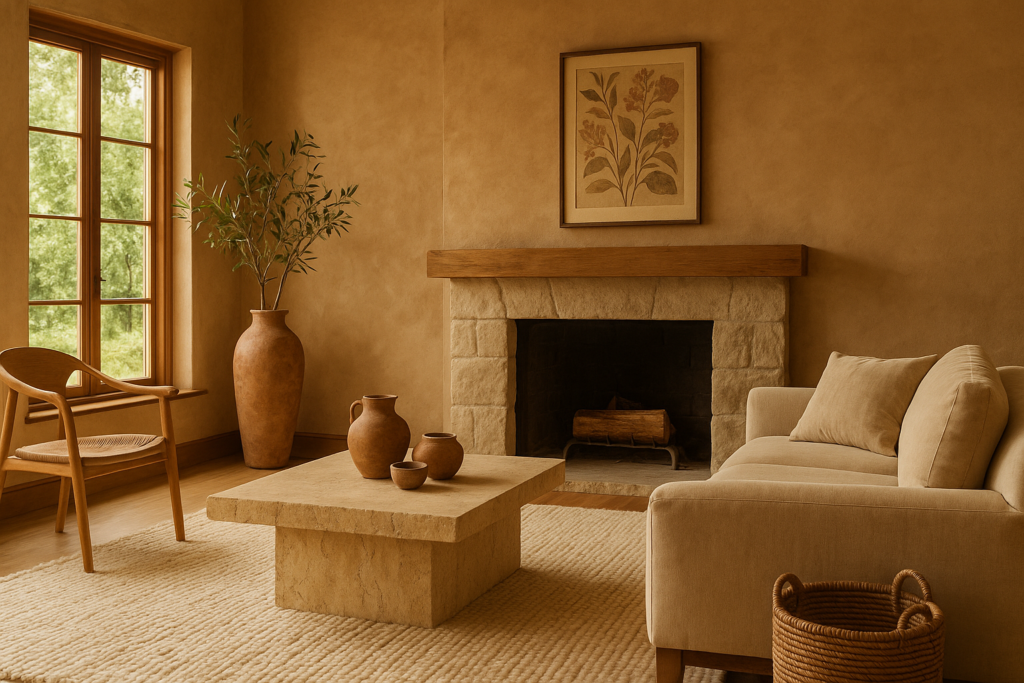
Stone brings a sense of weight and permanence that even hardwood can’t match. In this concept, stone becomes more than a fireplace surround: it appears as travertine coffee tables, limestone accent walls, slate side tables, stoneware lamps, or even textured plaster that looks like hand-troweled masonry.
These materials age beautifully—they soften, develop patina, and shift slightly with use. Pair with wool rugs, matte metals, and textural textiles. The room feels architectural and almost ancient in the best way.
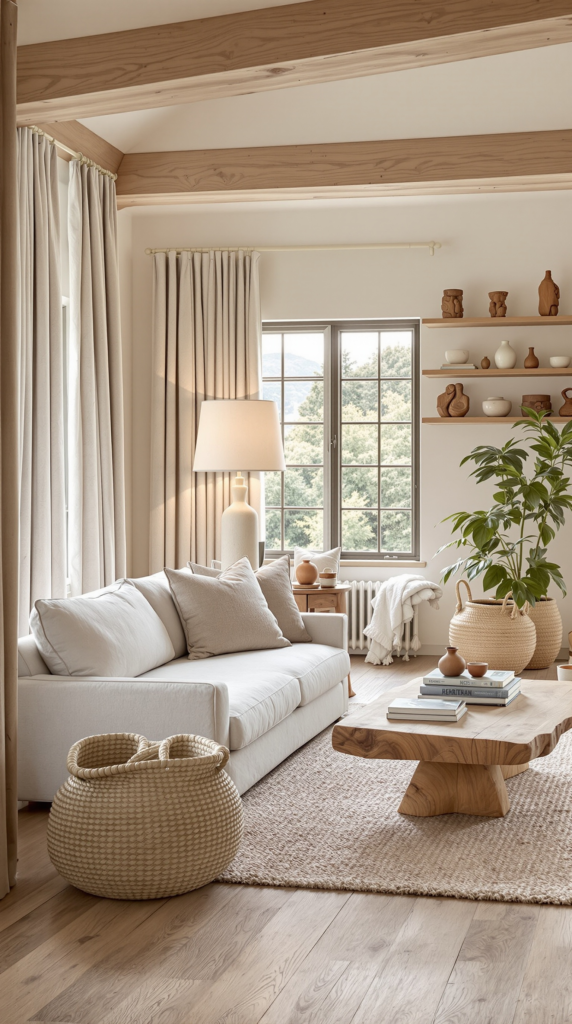
4. Raw Wood + Linen Organic Style
This is perhaps the most tactile of all concepts. Raw wood—with knots, grain movement, and tonal variation—paired with slubby, imperfect linens creates a living room that feels unforced and deeply human.
It’s about material honesty: finishes that aren’t shiny, textiles that aren’t synthetic, forms that aren’t perfect. Think low-sheen oak, untreated pine, linen slipcovers, woven baskets, natural rugs, and pottery that clearly shows the touch of the maker. Softness and ruggedness live side by side.
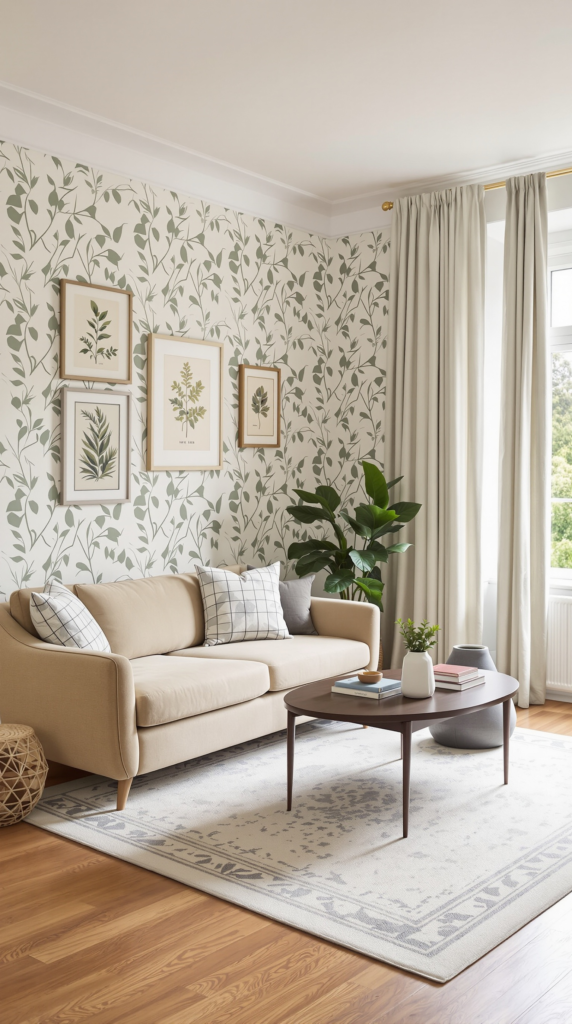
5. Botanical-Inspired Patterns
Botanical design becomes elevated when it avoids the obvious floral clichés and leans into structure, repetition, and nature’s geometry. Think leafy silhouettes in muted tones, vintage botanical prints framed in wood, wallpaper inspired by pressed plants, embroidered cushions with subtle foliage motifs, and drapery with softly winding vines.
These patterns add quiet movement to a room, like a slow breeze stirring leaves. When paired with earthy neutrals, they bring a gentle rhythm instead of chaos.
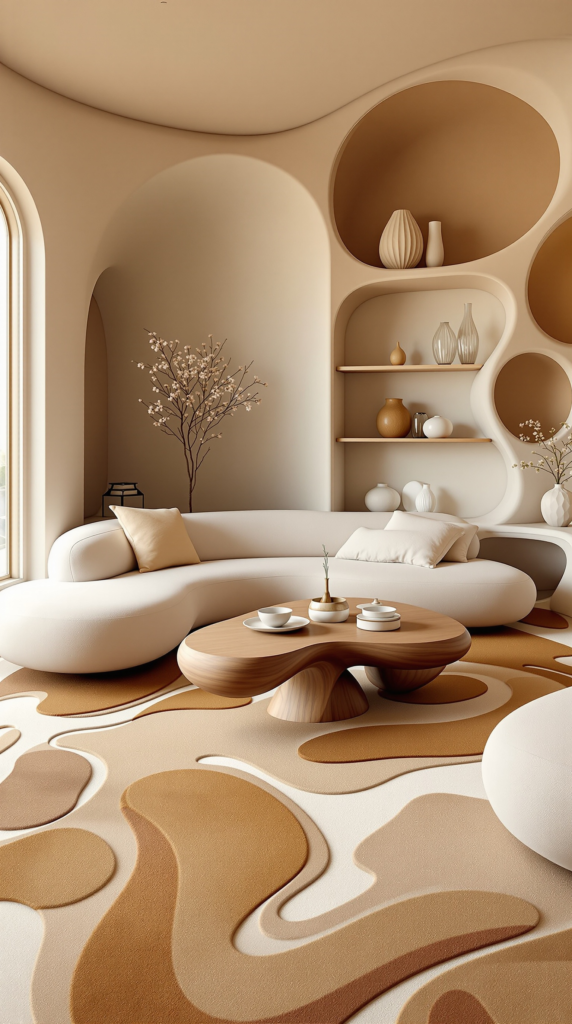
6. Nature-Inspired Curves & Shapes
Curves that mimic organic forms—river stone shapes, plant stems, dunes—bring softness and motion to a living room. Instead of sharp angles and rigid lines, you’ll see rounded sofas, rippled glass, sculptural side tables, and soft-edged shelves.
Even rugs take on fluid, asymmetric shapes. The effect is subtle: you don’t immediately register the shapes as “curvy,” but you feel the room loosen and relax. This is a concept rooted in biomorphism, giving the room a sense of quiet flow.
7. Desert-Inspired Earth Tones
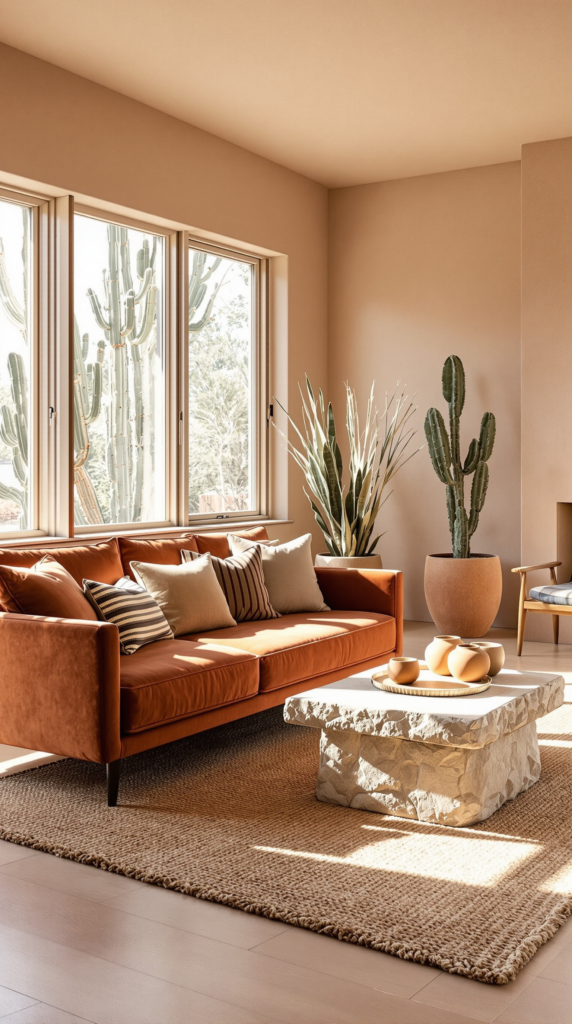
Desert palettes aren’t beige—they’re a blend of clay, sand, rust, umber, olive, and sun-washed neutrals that feel faded in a beautiful way. The key is matte surfaces and layered tones that mimic sunlight hitting rock and earth.
Use natural woods with warm undertones, ceramic vessels, woven textures, and stone details. Avoid stark whites; choose warm whites or bone. A desert-inspired living room feels like it’s been gently softened by the sun, warm but not hot, serene but not sleepy.
8. Rustic Woodland Influence
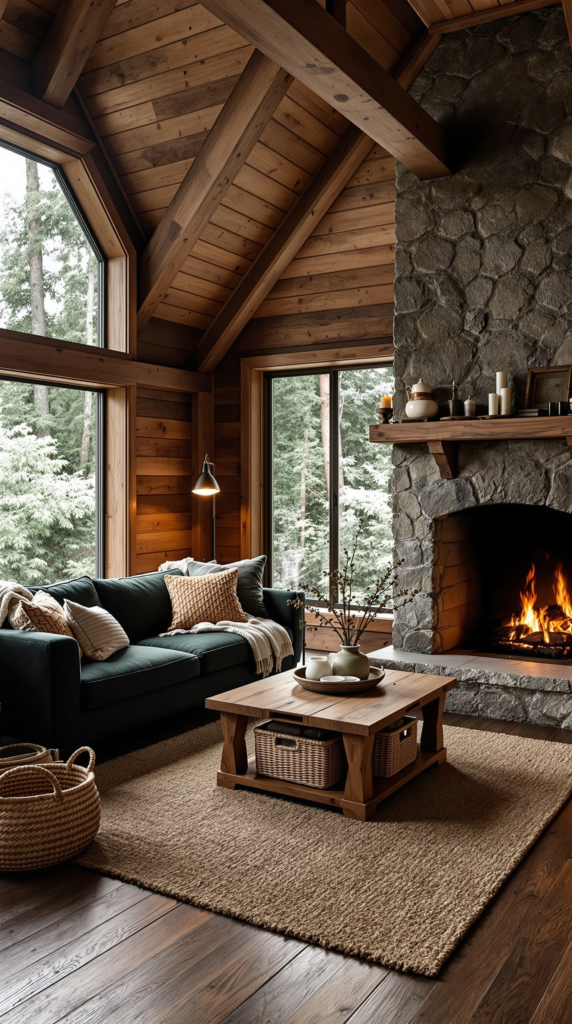
Woodland design leans into cooler earth tones than desert schemes. Think greenish browns, weathered wood, dark metals, stone accents, and woven baskets.
More rustic designs: From Farmhouse to Modern Cottage
It’s less about “rustic cabin” and more about capturing the quiet density of a forest floor—moss, bark, shadow, and muted light. Soft wool throws, deep-toned rugs, and tactile stoneware fit naturally here. The room feels grounded, safe, a little mysterious, and richly layered.
9. Indoor–Outdoor Living Room Blur
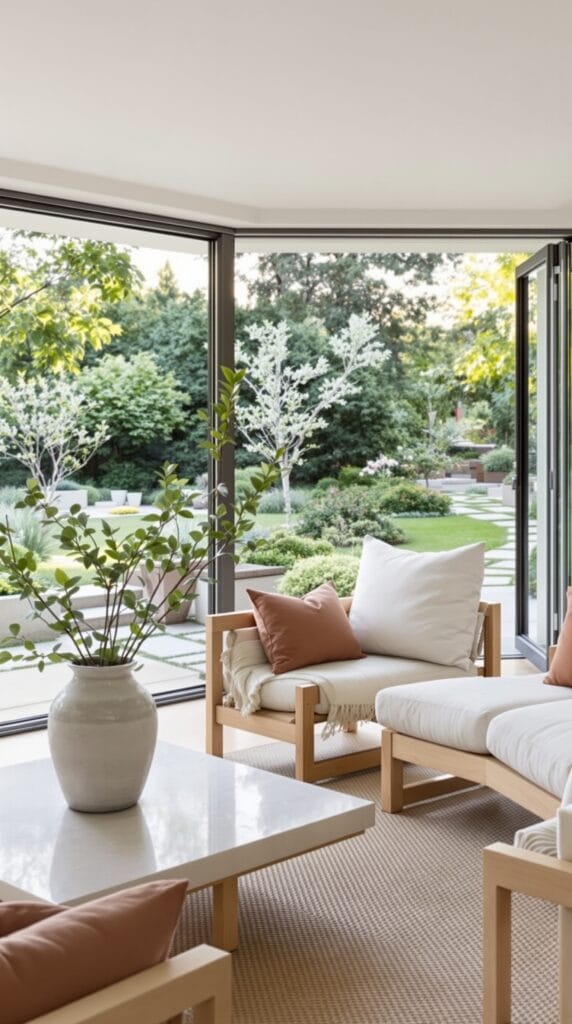
This concept isn’t about adding a plant or two—it’s about dissolving the visual boundary between interior and exterior. Large windows or glass doors help, but so do natural fiber rugs that mimic outdoor textures, stone planters, neutral fabrics, and furniture arrangements that flow outward rather than cluster around a TV.
Even scent matters here—fresh greens, eucalyptus, earthy candles. The living room becomes part extension of the outdoors, part sanctuary from it.
10. Handmade Pottery + Craft Textures
There’s something deeply comforting about objects that reveal their maker’s hand. In this concept, the living room becomes a celebration of craftsmanship: grooved pottery, carved wood stools, handwoven throws, hand-forged hardware, stitched leather, textured ceramics.
Nothing feels mass-produced—not because it’s expensive, but because it carries a sense of humanity. These textures create a room with soul, warmth, and a quiet sense of purpose.
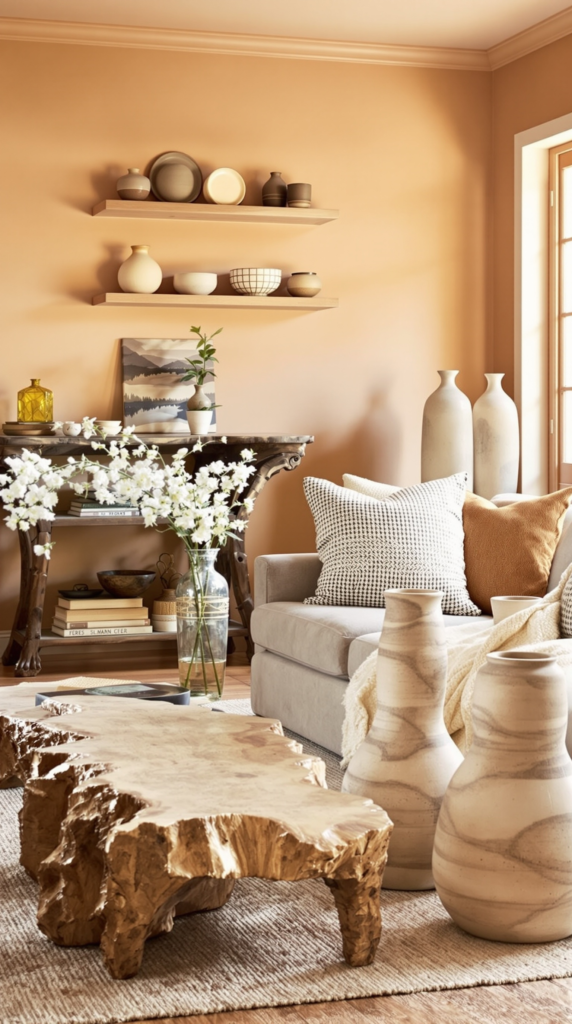
11. Earthy Mediterranean
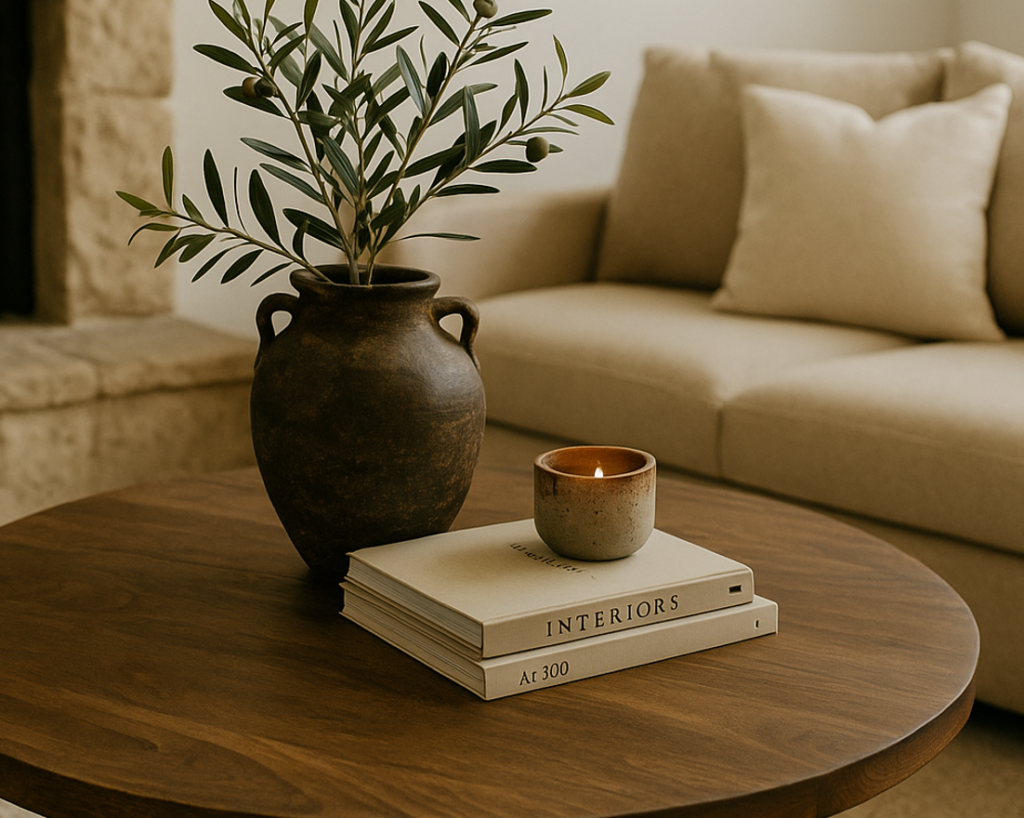
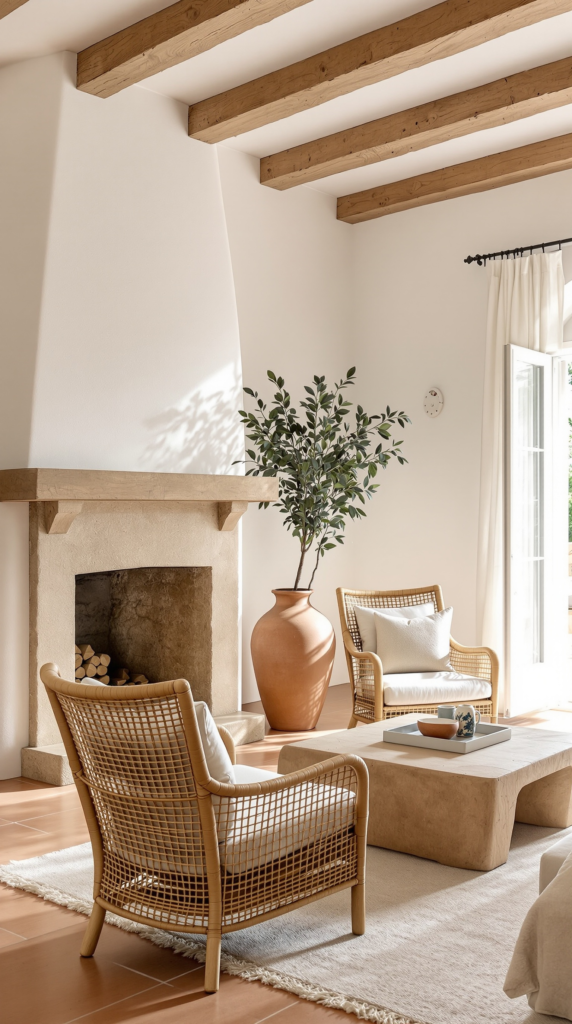
Mediterranean earthiness is softer and lighter than desert or woodland styles. Think olive wood, warm stone, sun-bleached whites, terracotta floors, rustic pottery, woven baskets, and breezy textiles.
The palette is light but never sterile; airy but never minimal. It’s the look of old countryside homes with thick plaster walls, aged beams, and gentle coastal breezes. The overall feeling is hopeful, warm, relaxed, and timeless.
In a nutshell
Earth-inspired living rooms work because they tap into something deeply familiar: the colors, textures, and materials we’re surrounded by in the natural world. Whether it’s the sun-baked warmth of terracotta, the quiet shelter of deep forest greens, or the raw honesty of stone and linen, these elements create spaces that feel both grounded and elevated.
Each of the design concepts above approaches “earthy” from a different angle, but they all share a commitment to authenticity—materials that age well, palettes drawn from minerals and landscapes, and silhouettes inspired by organic movement.
When you design with nature as the reference point, the room automatically gains depth and coherence. The space becomes calmer without losing character, warmer without feeling heavy, and timeless without slipping into trendiness. It’s less about decorating and more about building an atmosphere—one that feels lived-in, layered, and quietly connected to the world outside your windows.